
- Continued weakness in grain and oilseed futures could be an opportunity
- Soft commodities are always volatile
- Animal proteins could offer value at lower prices
- Super El Niño could wreak havoc with agricultural commodities
- Limited downside but a risk-off period could provide bargains
Each year is a new adventure for agricultural commodities, as weather across critical growing areas determines whether crops will meet growing global demand.
As the agricultural futures move into the 2027 crop year, the serious threat of a Super El Niño that could increase droughts and floods could spark significant buying. If shortfalls develop, prices could soar.
Meanwhile, continued conflict in Ukraine and the Middle East would underpin prices. Ukraine and Russia are Europe's breadbasket. Logistical issues at the Black Sea ports could limit supplies. The threat of escalation in the Middle East could push oil prices higher, supporting agricultural products that are critical biofuel ingredients. Moreover, because agricultural commodities require fertilizers, rising prices and shortages from the ongoing wars could put upward pressure on all agricultural commodity prices.
The bottom line is that the ag futures markets could face a very bullish storm in 2027 if Super El Niño, worldwide conflicts, and fertilizer shortages combine to cause deficits. Each year, the growing worldwide population requires more food and fuel, so agricultural commodity producers must grow more crops to meet ever-growing global demand. I believe the current environment supports higher agricultural commodity prices, with limited downside price risk over the coming months and throughout the 2027 crop year.
Continued weakness in grain and oilseed futures could be an opportunity
The grain and oilseed sector composite was 35.88% higher over the first three quarters of 2026. The composite is the average price change in CBOT soybean, corn, wheat, oats, and rough rice futures. Grain and oilseeds futures rallied as the ongoing war in Ukraine impacted Europe's breadbasket, and the conflict in the Middle East threatened fertilizer supplies and boosted energy and biofuel prices. Agricultural commodities are the main ingredients in biofuel.
In late November 2026, while rough rice prices were higher than the September 30 closing level, all other composite members declined. While prices are trending lower, and lower lows are possible in December and early 2027, the price weakness could create an opportunity for the coming crop year. Conflicts in Ukraine and the Middle East will likely underpin grain and oilseed prices in 2027, limiting downside and making upside potentially explosive. Wheat could be the commodity most affected by the situation in Ukraine, as the ongoing war could reduce production and logistical issues at Black Sea ports could disrupt exports. Ukraine recently took out the Kerch bridge, a critical shipping route between the Black Sea and the Sea of Azov. The bridge collapse blocked the Kerch-Yenikale Canal, a 120-meter-wide shipping channel and a critical export artery for Russian grain and oilseeds.
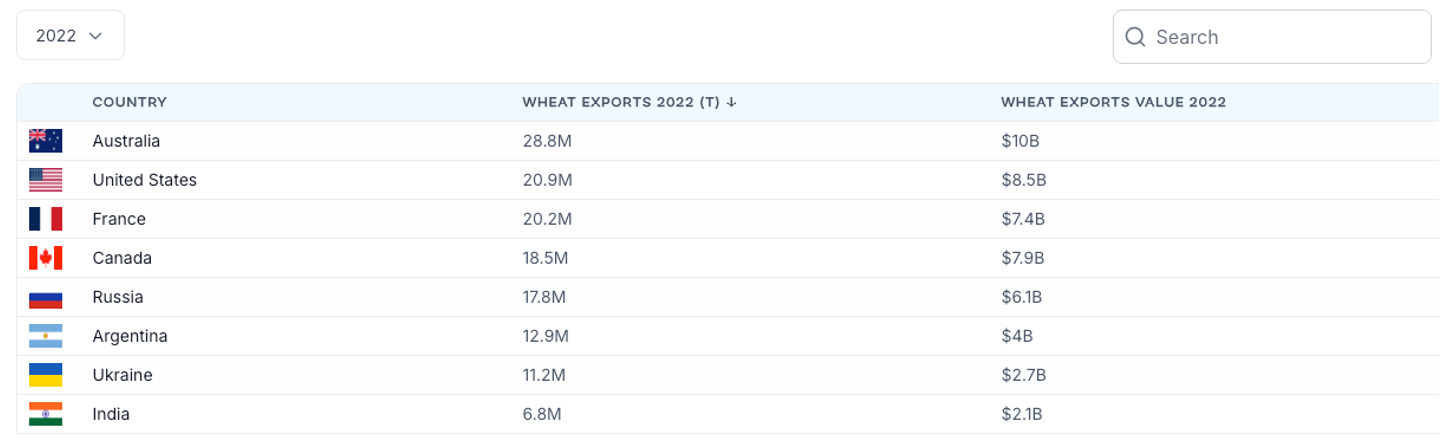
Source: worldpopulationreview.com
The chart shows that Russia and Ukraine are leading wheat exporters. In 2022, combined Russian and Ukrainian wheat exports of 29 million tons topped Australia's first-place total. The war zone in Europe's breadbasket could impact prices in 2027.
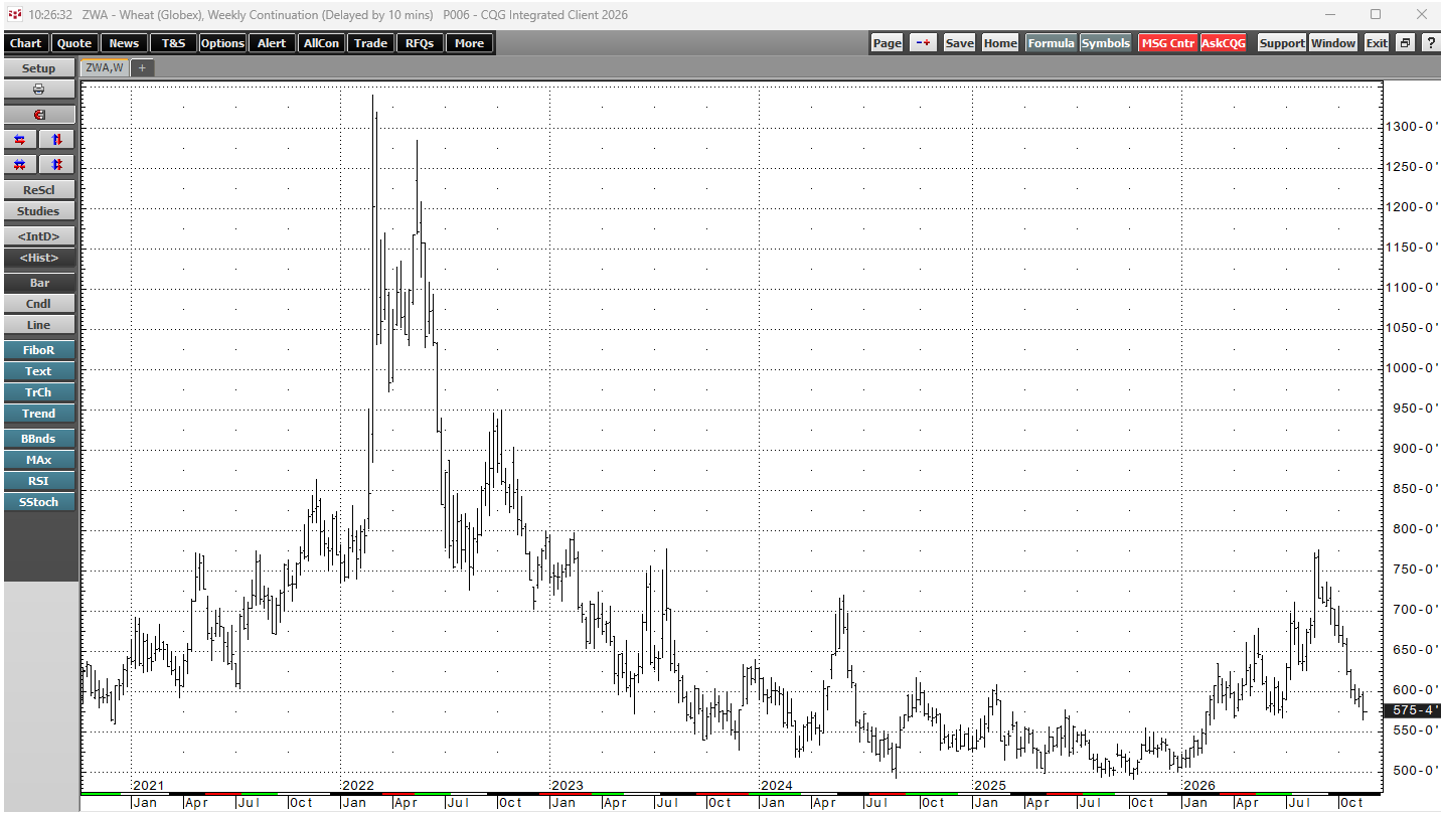
The weekly chart shows that CBOT wheat futures rose 54.7% from the late December 2025 low of $5.0150 to the 2026 high of $7.7575 per bushel during the last week of August. While the price has pulled back to just over $5.75 per bushel in late November, the CBOT soft red winter wheat futures, the most liquid global benchmark for wheat prices, was still comfortably above the late 2025 low. In 2022, when Russia invaded Ukraine, the CNT wheat futures rose to a record high of $13.40 per bushel.
For corn, soybeans, oats, and rice, fertilizer shortages caused by the Middle East conflict, rising biofuel demand, and weather events could push prices higher in 2027. While corn, soybean, wheat, and oat futures prices have declined from their 2026 highs, rough rice futures remain near highs and at their highest level since 2024, as weather has impacted Asian production and exports, driving panic buying and fears of shortages.
Going into 2027, the wars in Ukraine and the Middle East, the weather conditions, and the mostly bullish trends from low prices over the past few years favor the upside in the grain and oilseed sector. The downside risk could be limited while the upside potential is explosive, creating an attractive risk-reward profile for the coming year.
Soft commodities are always volatile
The soft commodities sector includes world, unsubsidized sugar, Arabica coffee bean, cocoa bean, cotton, and frozen concentrated orange juice futures. Over the first three quarters of 2026, the sector was 2.92% lower, after falling by 25.17% in 2025 and rising 58.14% in 2024. The sector moved 24.04% higher in 2023. Coffee futures rose to a new record high in 2025, while cocoa and FCOJ futures reached all-time highs in 2024.
Brazil is the leading producer of sugarcane, coffee beans, and oranges. The recent election is likely bearish for Brazil's currency, which is not bullish for Brazilian commodity prices. However, the weather is the critical factor for crop production. Meanwhile, sugarcane prices correlate with oil and gasoline prices, as Brazil processes sugarcane into ethanol.
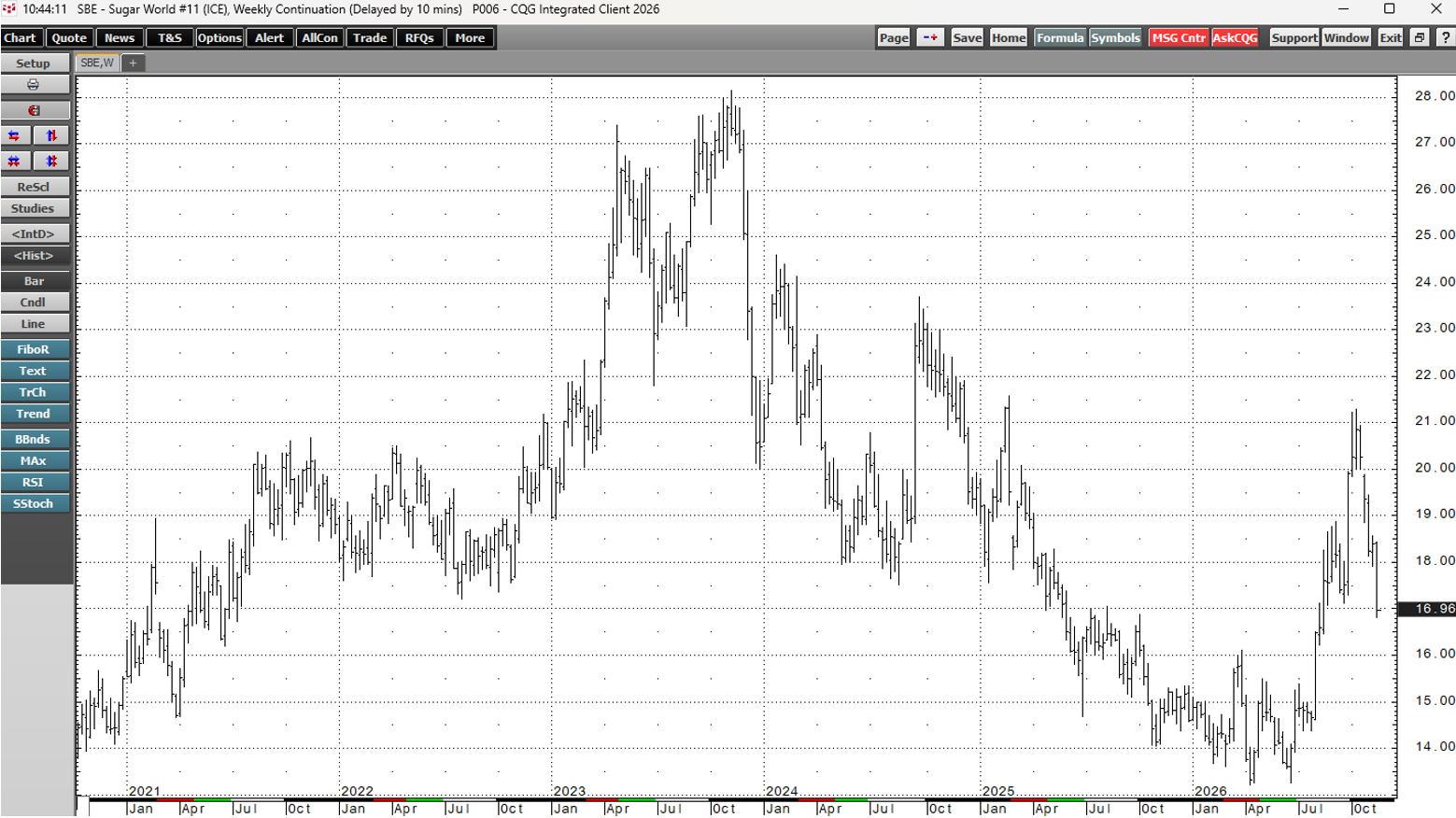
The ICE world sugar futures chart shows that the price rose 61% from 13.22 cents in mid-April to 21.29 cents per pound in mid-October 2026. At near 17 cents per pound in late November, nearby world sugar futures are around the midpoint of the 2026 trading range.
As soft commodities move into 2027, the weather in the critical growing regions- Brazil for sugar, coffee, and OJ; West Africa for cocoa; and China, India, Brazil, and the United States for cotton - will dictate the path of least resistance for prices. However, inflation, fertilizer shortages, tariffs, and sanctions could affect prices in the coming year.
Animal proteins could offer value at lower prices
The animal protein sector includes live and feeder cattle, and lean hog futures. Over the first three quarters of 2026, the sector was 5.22% lower, after rising 18.95% in 2025 and 17.21% in 2024.
Live and feeder cattle prices have been in bullish trends since their 2020 pandemic-inspired lows.
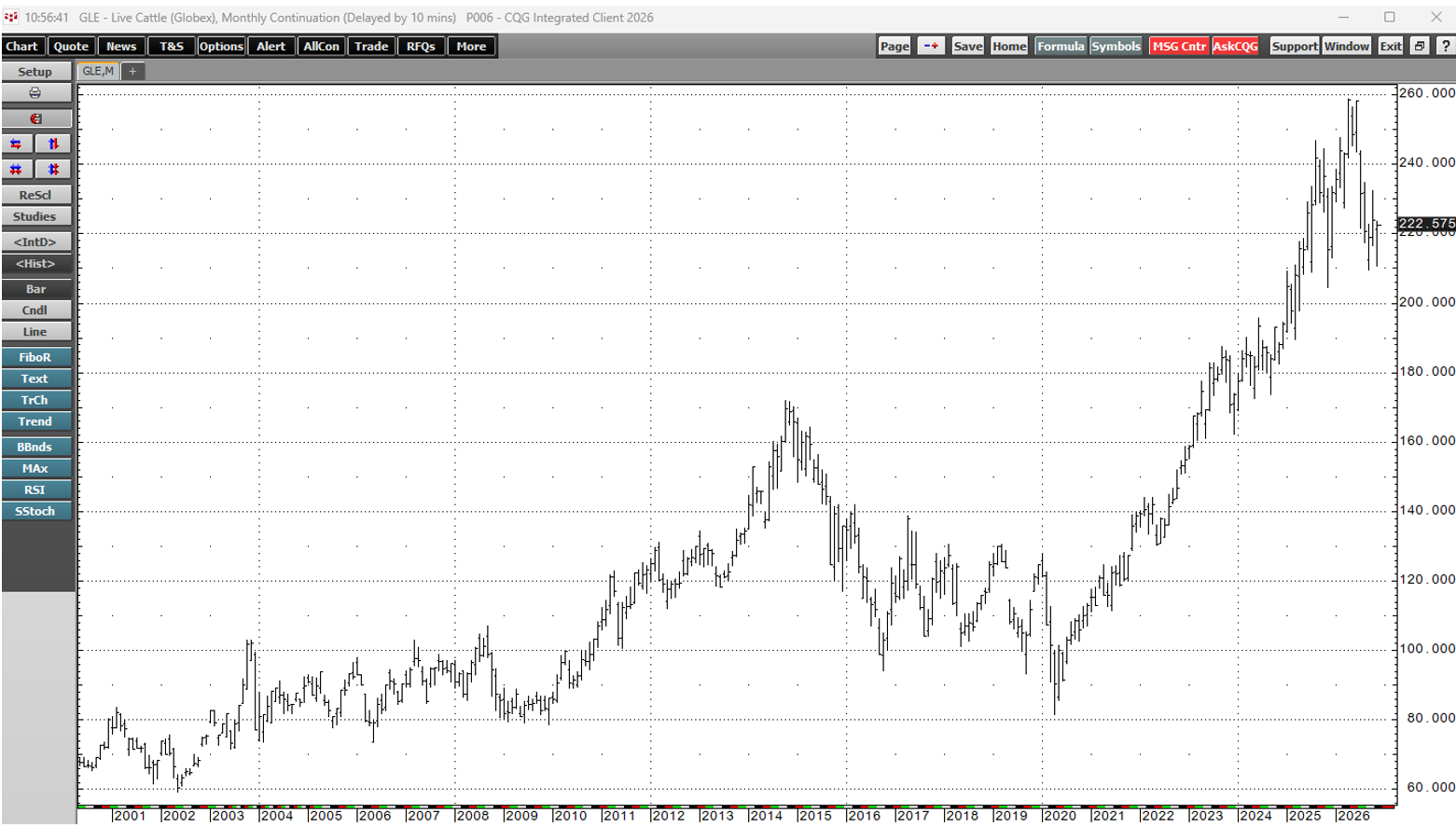
The monthly CME live cattle futures chart highlights the 217.6% rise from the 2020 low of 81.45 cents in April 2020 to the record high of $2.58725 per pound in April 2026.
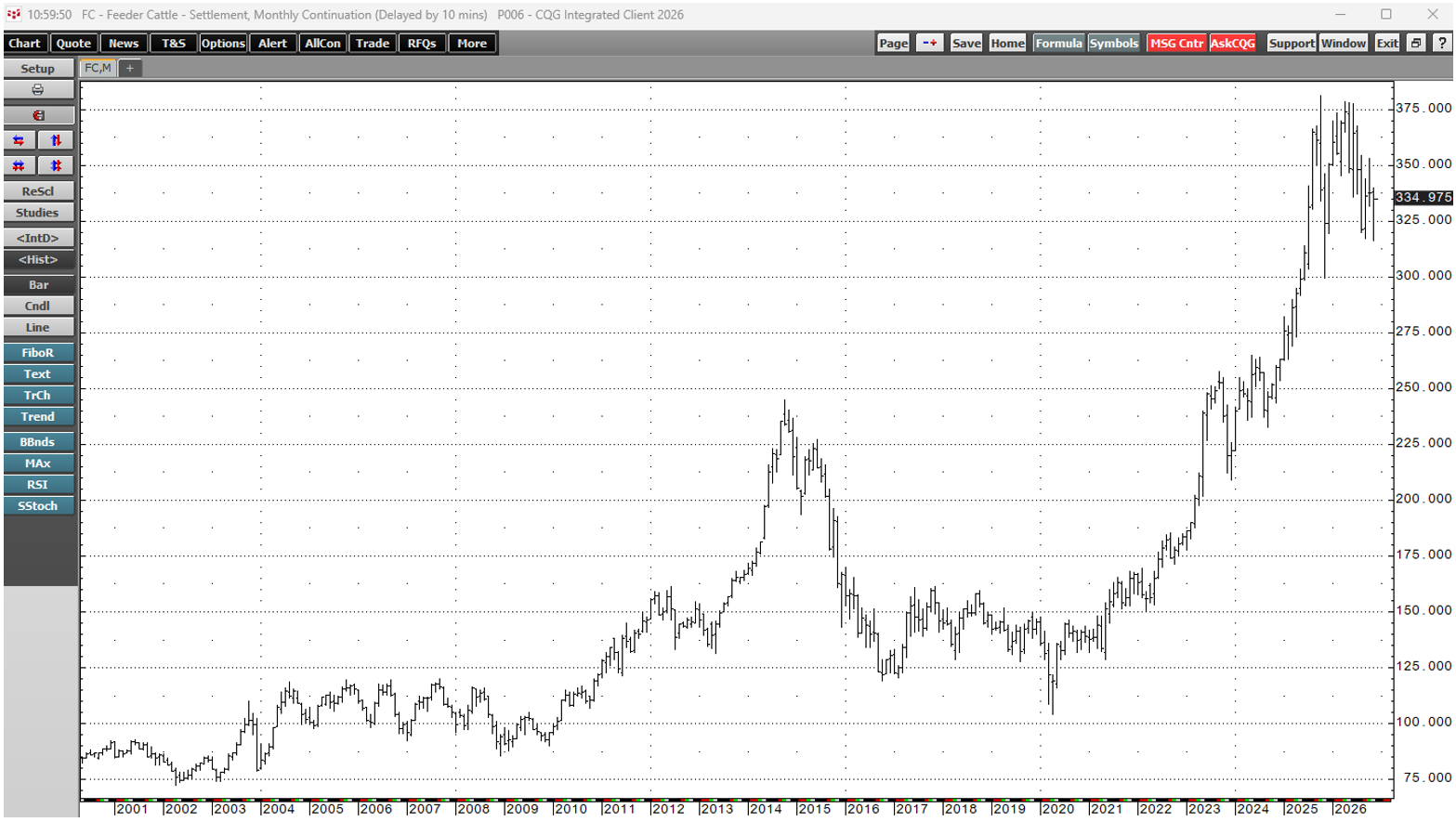
The monthly CME feeder cattle futures chart highlights a 266.5% rise from the April 2020 low of $1.0395 to the October 2025 record high of $3.81025 per pound.
While live and feeder cattle futures remain in long-term bullish trends in late November 2026, they have lost some bullish momentum. Meanwhile, lean hog futures have been choppy, reflecting seasonal factors. However, the price recently dropped to a multi-year low.
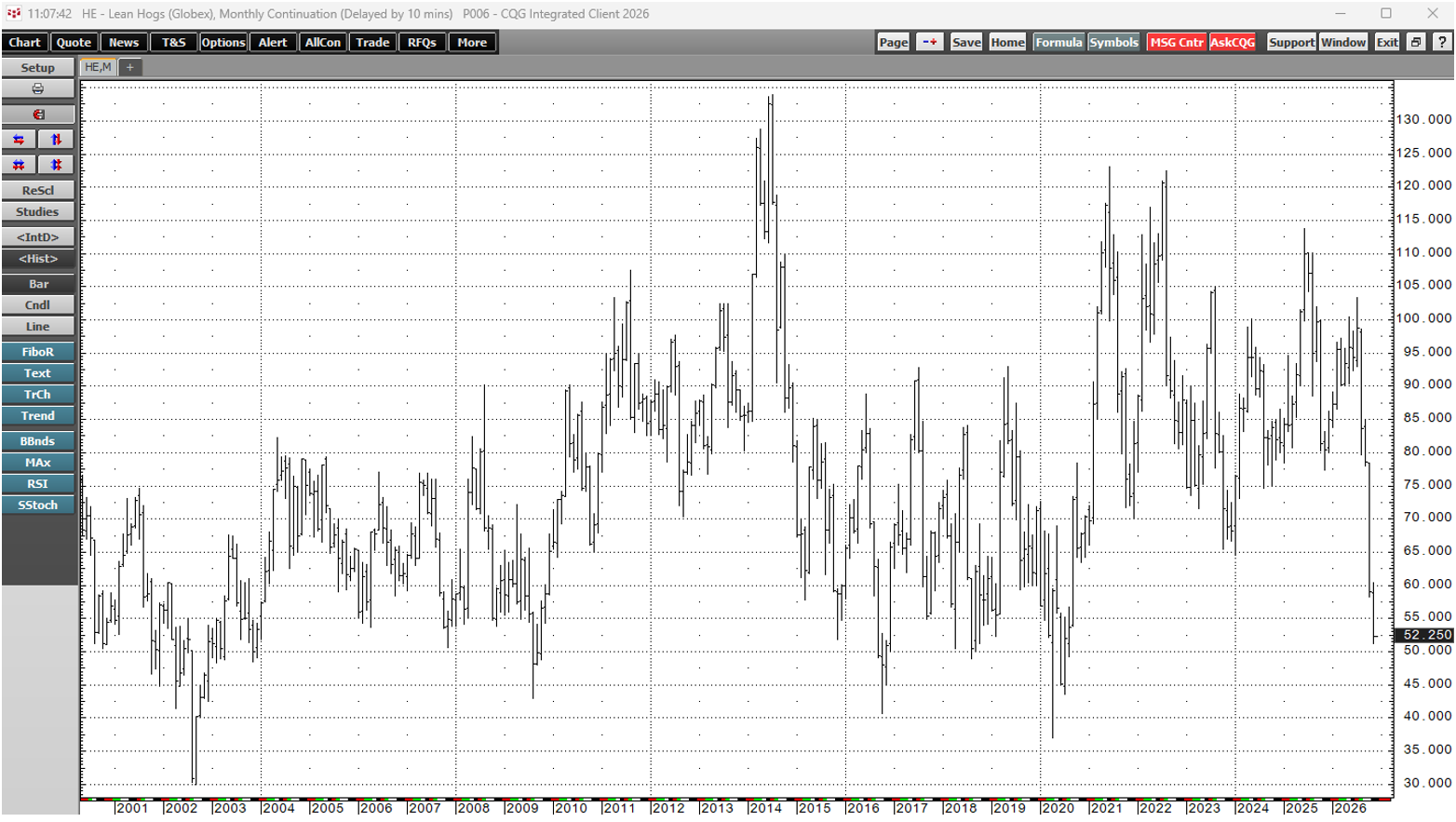
The monthly chart shows that the November 2026 low of 51.225 cents per pound is the lowest pork price since August 2020. Hog futures reflect seasonal trading patterns, rising to annual highs during the spring and summer grilling season and lows during fall and winter, the offseason for demand.
As cattle and hog prices decline during the offseason for demand, it could create an opportunity if delivery prices in the peak grilling-season months in 2027 decline over the coming weeks and months.
Super El Niño could wreak havoc with agricultural commodities
The primary driver of agricultural commodity prices is weather across critical growing regions. Agricultural commodities depend on stable and seasonal weather patterns for crops to thrive. Animal proteins are also weather-sensitive, as feed prices are a critical production cost. While inflation, trade issues, geopolitics, and logistical factors can impact prices, weather events trigger the most significant price volatility.
According to an October 2026 Scientific American article:
An exceptionally strong El Niño - potentially the largest in living memory - is raising Pacific Ocean waters to record-high temperatures. The effects on ecosystems, especially coral reefs, and the world's weather, from floods in California to droughts in Indonesia, are already being felt and will have lasting ramifications.
As the Super El Niño develops over the coming months and impacts weather patterns in 2027, it could impact the agricultural products that feed and increasingly power the world. Uncertainty in weather patterns could begin to affect prices as futures markets focus on the 2027 crop year across three agricultural sectors: grains and oilseeds, soft commodities, and animal proteins.
Limited downside but a risk-off period could provide bargains
The ongoing wars in Ukraine and the Middle East, global inflation, trade barriers from sanctions and tariffs, and the immediate threat of a Super El Niño could limit downside risk and create explosive upside potential in grain, oilseed, soft commodity, and animal protein futures prices. The commodities that feed and increasingly fuel the world can be highly volatile, and all the ingredients are in place for higher prices in 2027.
While risk-reward favors the upside, a risk-off period across asset classes could derail rallies and cause significant price declines, as we saw during the 2020 global pandemic. While I would view any price declines as a buying opportunity, I would leave plenty of room to add, as picking bottoms is dangerous. Soft commodities have shown us time and time again that prices can rise or fall to levels that defy reasonable, logical, and rational fundamental and technical analysis. However, periods of wild price swings tend to create the most profitable trading opportunities.
I am bullish on agricultural commodity prices in 2027, but any long positions in late 2026 require leaving plenty of room to add on further declines.