
- Sentiment in the leading grain and oilseed markets remains bearish
- Signs of bullish life in CBOT soybeans, corn, and wheat
- The weather is critical, as each year is a new adventure in the agricultural commodities
- The three factors that support higher grain and oilseed prices in 2026
- Limited downside risk in grains and oilseeds
In 2023 and 2024, soft commodity prices rose, with ICE sugar and cotton futures hitting multiyear highs, while Arabica coffee, cocoa, and frozen concentrated orange juice futures rallied to new record high prices. In 2025 and early 2026, prices have corrected, as the cure for the high prices was those elevated levels. In commodities, prices can explode to levels where production increases, inventories begin to grow, consumers seek substitutes or limit purchases, leading to tops and price reversals. We have witnessed this phenomenon in the soft commodities sector.
In grains, the highs from 2022 in the CBOT soybean, corn, and wheat futures led to substantial corrections for the same reasons. However, prices have declined to levels that could offer significant value for the 2026 crop year, as the cure for low prices is often those low prices.
Sentiment in the leading grain and oilseed markets remains bearish
The price action in the leading grain and oilseed futures market on the CME's CBOT division has been bearish since the highs in 2022.
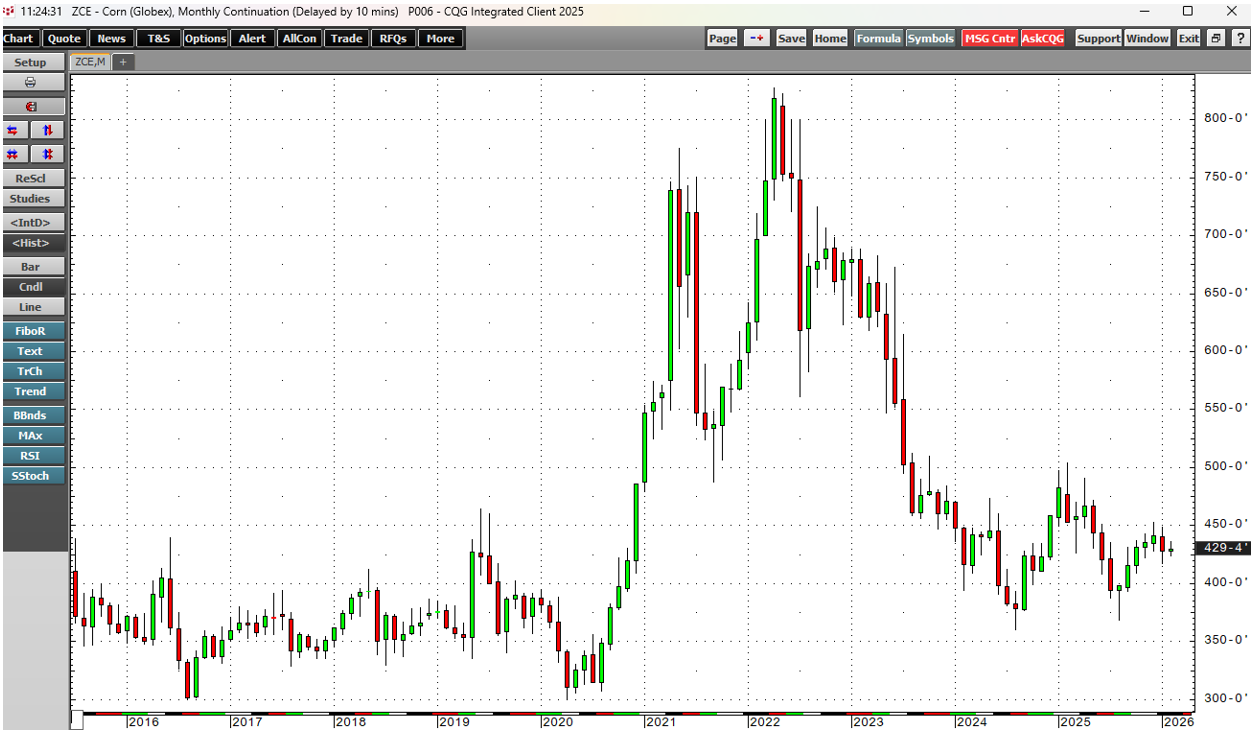
The monthly CBOT corn futures chart shows the 56.4% decline from the April 2022 $8.27 high to the August 2024 $3.6050 per bushel low.
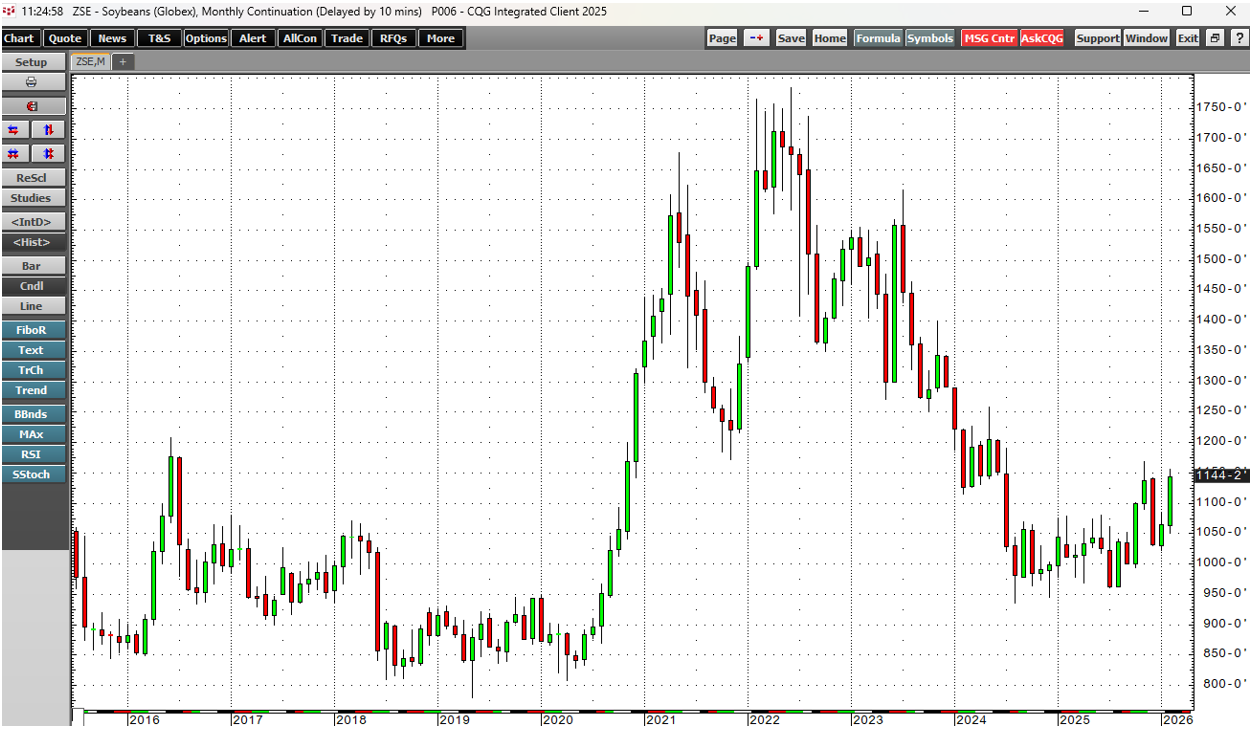
The monthly CBOT soybean futures chart shows the 47.5% decline from the June 2022 $17.8400 high to the August 2024 $9.3625 per bushel low.
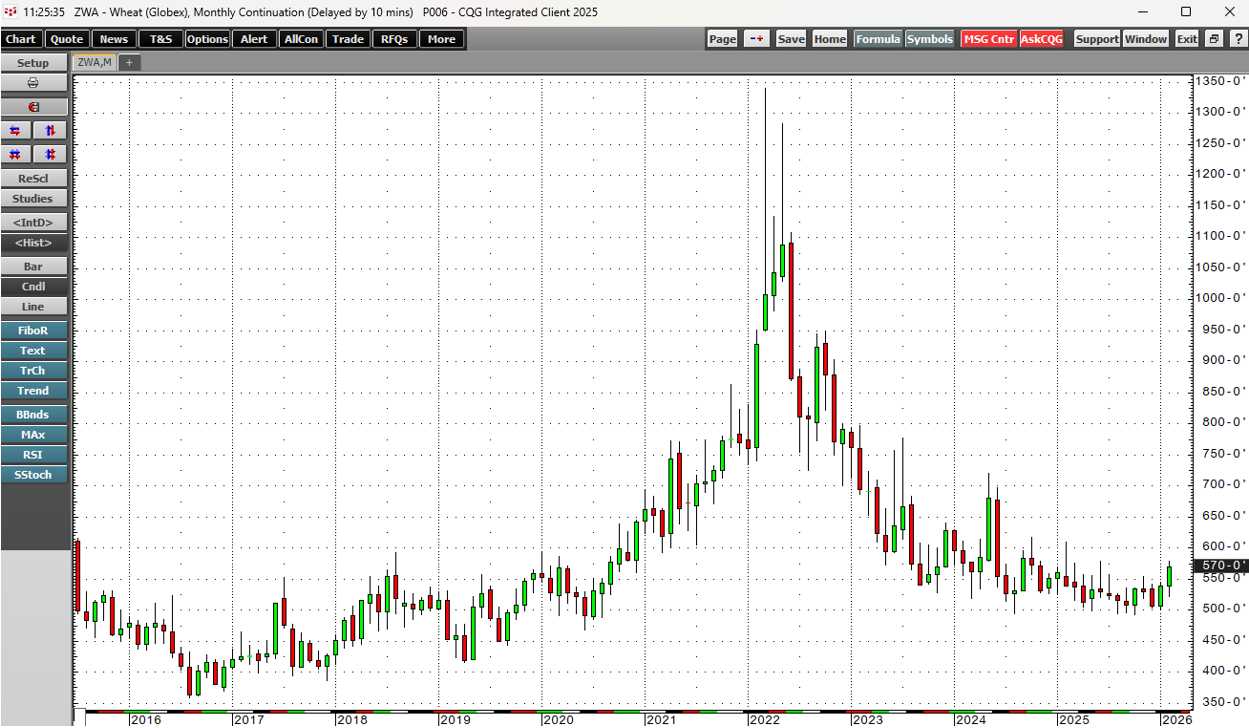
The monthly CBOT soft red winter wheat futures chart shows the 63.3% decline from the March 2022 record high of $13.4000 high to the October 2025 low of $4.9225 per bushel low.
The U.S. Department of Agriculture's most recent February World Agricultural Supply and Demand Estimates Report was not terribly bullish for grain and oilseed prices. The full text of the February WASDE report is available through this link.
Signs of bullish life in CBOT soybeans, corn, and wheat
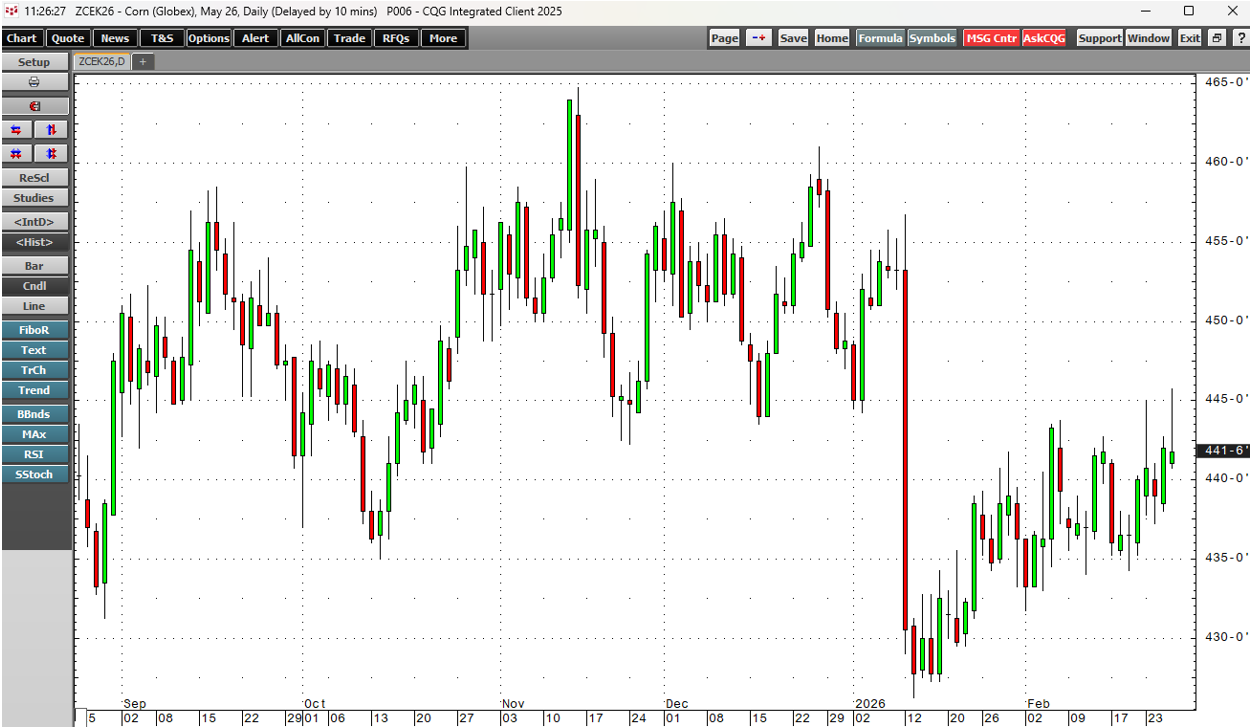
The daily nearby CBOT corn futures chart for May delivery shows have been trading in a sideways trend with a bullish bias, and were above $4.40 per bushel in late February. May corn futures have made higher lows and higher highs since reaching a higher low of $4.2625 per bushel in mid-January 2026.
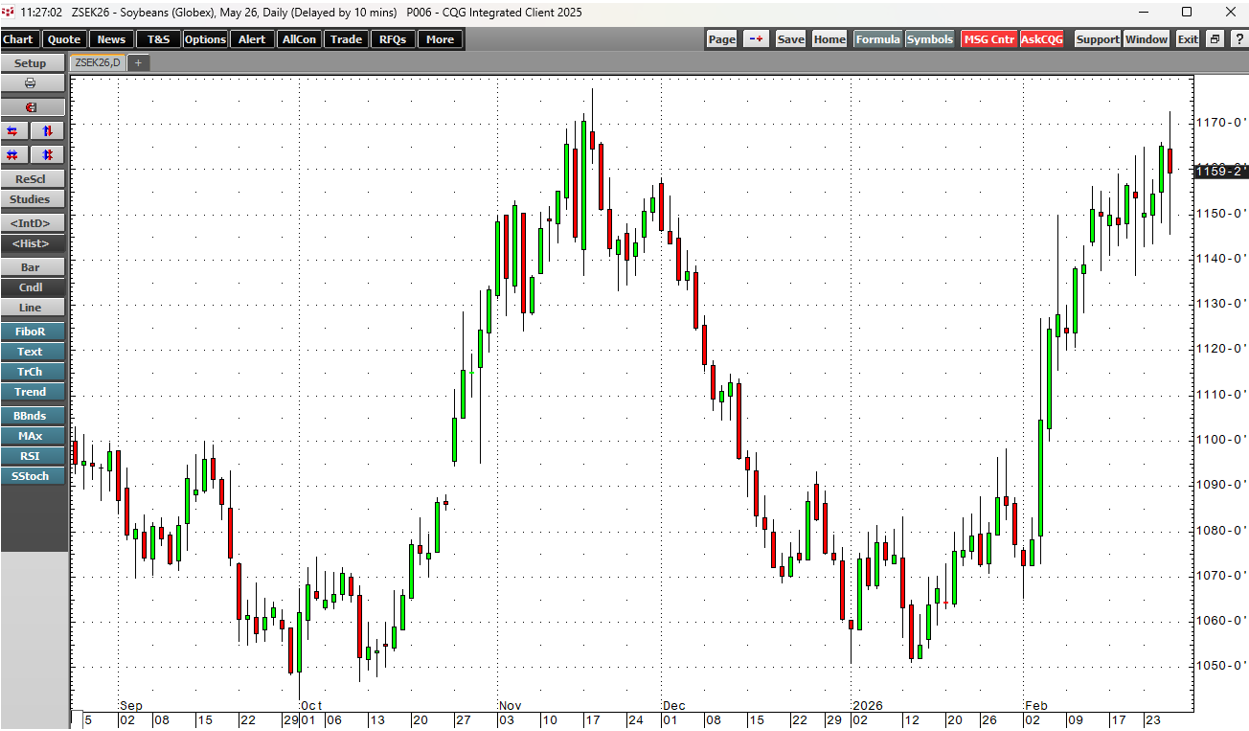
Nearby May CBOT soybean futures have been trading in a bullish trend since the low in August 2025, and were just below the $11.60 level in late February.
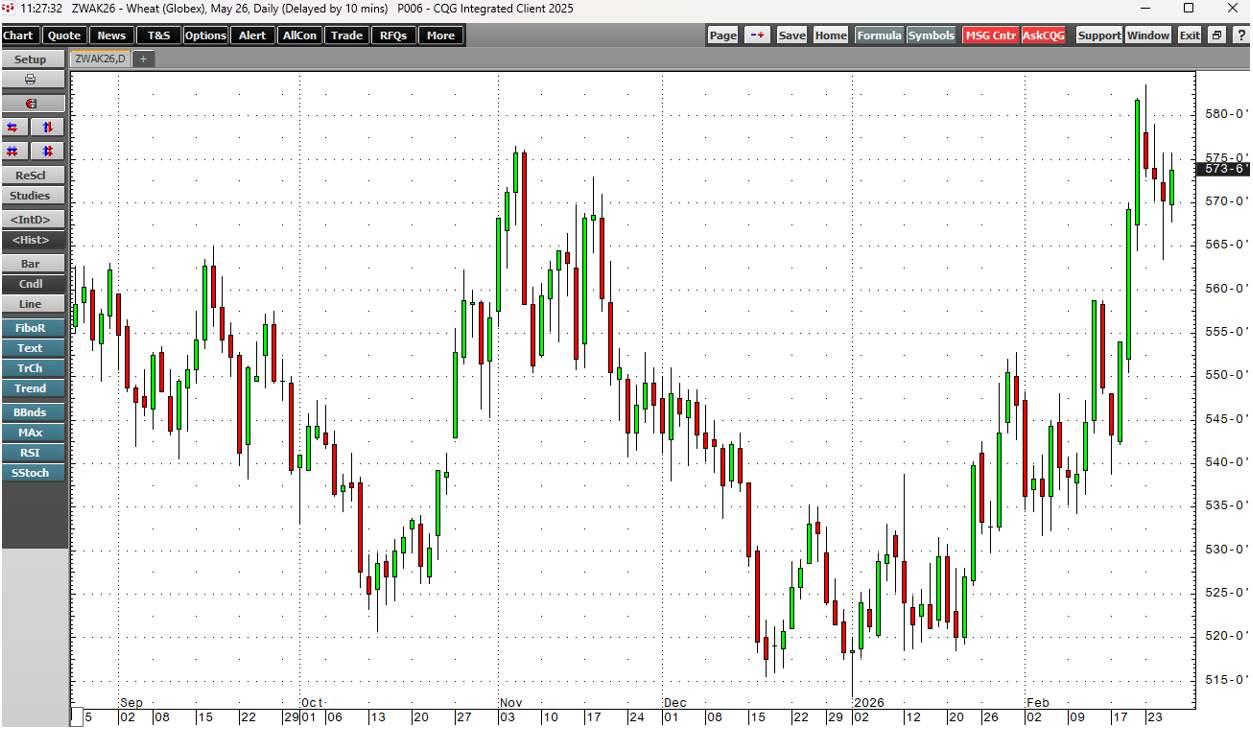
Nearby May CBOT wheat futures have been making higher lows and higher highs since the January 2, 2026, low, and were just below $5.75 in late February. As the 2026 crop year approaches, uncertainty has lifted prices.
The weather is critical, as each year is a new adventure in the agricultural commodities
Each year is a new weather adventure for agricultural products, the uncertainty in the leading growing regions drives prices higher as the crop year approaches.
Droughts, floods, crop diseases, and other factors can cause production issues, leading to explosive price appreciation, as we witnessed in coffee, orange juice, and cocoa markets over the past few years. Meanwhile, in 2022, Russia's invasion of Ukraine caused grain and oilseed prices to rally, with CBOT wheat reaching a record high and corn and soybean futures rising to within pennies of their record 2012 record highs. In early March, uncertainty surrounding these factors during the Northern Hemisphere's annual planting, growing, and harvest seasons often peaks. If Mother Nature does not cooperate or other factors arise, prices can become highly volatile.
The three factors that support higher grain and oilseed prices in 2026
The three most compelling factors supporting grain and oilseed prices in 2026 are as follows:
- Growing demand: In 1959, fewer than 3 billion people lived on Earth. Sixty-seven years later, the population has grown by over 175% to more than 8.168 billion. Exponential population growth requires ever-increasing amounts of food and energy. Agricultural commodities feed the world and are increasingly powering it. The agricultural sector includes grain and oilseeds, animal proteins, and soft or tropical commodities, all of which are either food or crucial food ingredients. However, the world's growing energy demand and policies encouraging clean energy have only increased the demand side of many agricultural products' fundamental equations.
- Inflationary pressures: The 2020 global pandemic's legacy was inflation. Central banks and governments unleashed unprecedented liquidity into economies during the COVID-19 pandemic, at a steep price. While inflation has declined towards the U.S. Fed's 2% target and the short-term Fed Funds Rate has moved lower to a midpoint 3.625%, longer-term rates remain elevated, and the impact of years of heightened inflationary pressures has increased production costs for commodities, and agricultural products are no exception. Higher production costs put upward pressure on all raw material prices.
- Weather and other uncertainty: Aside from weather uncertainty, Russia's invasion of Ukraine caused grain and oilseed prices to explode, with CBOT wheat reaching a record high and corn and soybean futures rising to within pennies of their record 2012 record highs. Geopolitical events that impact production or logistics can cause supply issues leading to higher prices.
Limited downside risk in grains and oilseeds
Given the current price levels, growing demand for food and energy, the price action over the past few years, the uncertainty of weather, and tensions on the geopolitical landscape, I view the potential for upside rewards as much greater than downside risks in the grain and oilseed futures market in 2026.