
- July COMEX copper futures rise to over $6.70 per pound
- Goldman Sachs' target was $6.80 in 2021 when the high was below $5 per pound
- The factors that could push copper above Goldman's target over the coming months and years
- The risk of corrections rises with the price
- Copper is now a trade, not an investment
In October 2021, nearby COMEX copper prices reached a low of 60.50 cents per pound. Copper has not traded below $1 per pound since December 2023, under $2 since May 2009, below $3 since October 2020, below $4 since September 2024, and under $5 per pound since November 2025. Copper has been in a bull market for over two decades, making higher lows and higher highs.
Copper's supply-demand equation has supported higher prices over the past decades as production struggles to keep pace with rising demand from infrastructure, electronics, clean energy initiatives, and now AI applications. Meanwhile, stubborn inflation has increased production costs, turbocharging higher prices amid ever-growing demand.
At its most recent high, COMEX copper futures reached one of the leading analyst's long-term price targets, suggesting that further gains could be challenging and trading ranges will continue to widen.
July COMEX copper futures rise to over $6.70 per pound
COMEX copper futures have made higher lows and higher highs for years. In May 2026, the nearby May COMEX copper futures contract reached another record high.
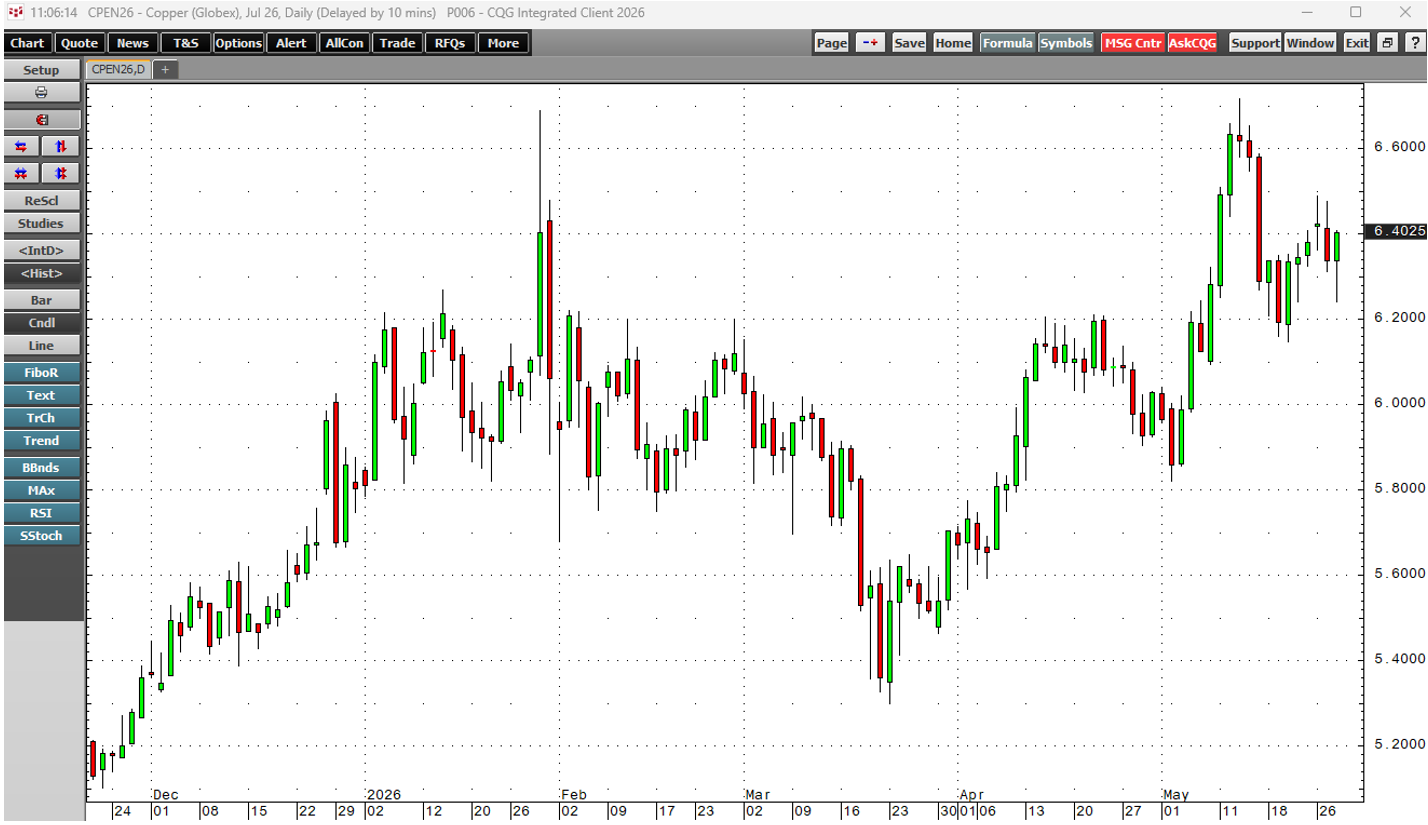
The daily chart highlights that July copper futures rose to $6.7160 per pound on May 13, 2026. The continuous futures contract reached $6.6450 per pound.
Goldman Sachs' target was $6.80 in 2021 when the high was below $5 per pound
The continuous COMEX copper futures contract traded in a $3.9435 to $4.5530 per pound range in April 2021. In an April 15, 2021, article in Recycling Today, Brian Taylor wrote:
A commodities analyst from New York-based Goldman Sachs calls copper "the new oil" and predicts its price is heading toward $51,000 per metric ton, or $6.80 per pound by 2025.
The $51,000 per ton text was a typo, as the Goldman Sachs report stated the upside targets were $15,000 per ton and $6.80 per pound. Goldman Sachs was one year late as COMEX copper futures rose to only 8.4 cents below their target on May 13, 2026. So far, the high in three-month copper forwards on the London Metals Exchange has been $14,527.50 in January 2026, $472.50 below Goldman's upside target. In April 2021, the LME forwards traded from $8,695 to $10,008 per ton.
The bottom line is that Goldman's analysts got it dead right, and copper has moved within striking distance of its upside target.
The factors that could push copper above Goldman's target over the coming months and years
The April 2021 Goldman forecast cited rising demand from EVs and other green energy decarbonization initiatives, and supplies struggling to keep pace with the demand, as the reasons for its bold upside price forecast. However, in 2026, with copper at the precipice of hitting its targets, another significant demand vertical has developed.
Artificial intelligence will require lots of copper for its physical infrastructure. Power cables, busbars, and grid connections require massive amounts of copper to channel electricity. High-speed cabling, circuit boards, and chips depend on copper, as do advanced data center cooling systems. Copper is a transition metal with exceptional electrical and thermal conductivity, as well as corrosion resistance. The bottom line is that AI has turbocharged Goldman's 2021 case for higher copper prices and could push its price far above the $6.80 per pound target.
The risk of corrections rises with the price
While Goldman's 2021 bold price forecasts look conservative in late May 2026, the risk of corrections will continue to rise with the red metal's price.
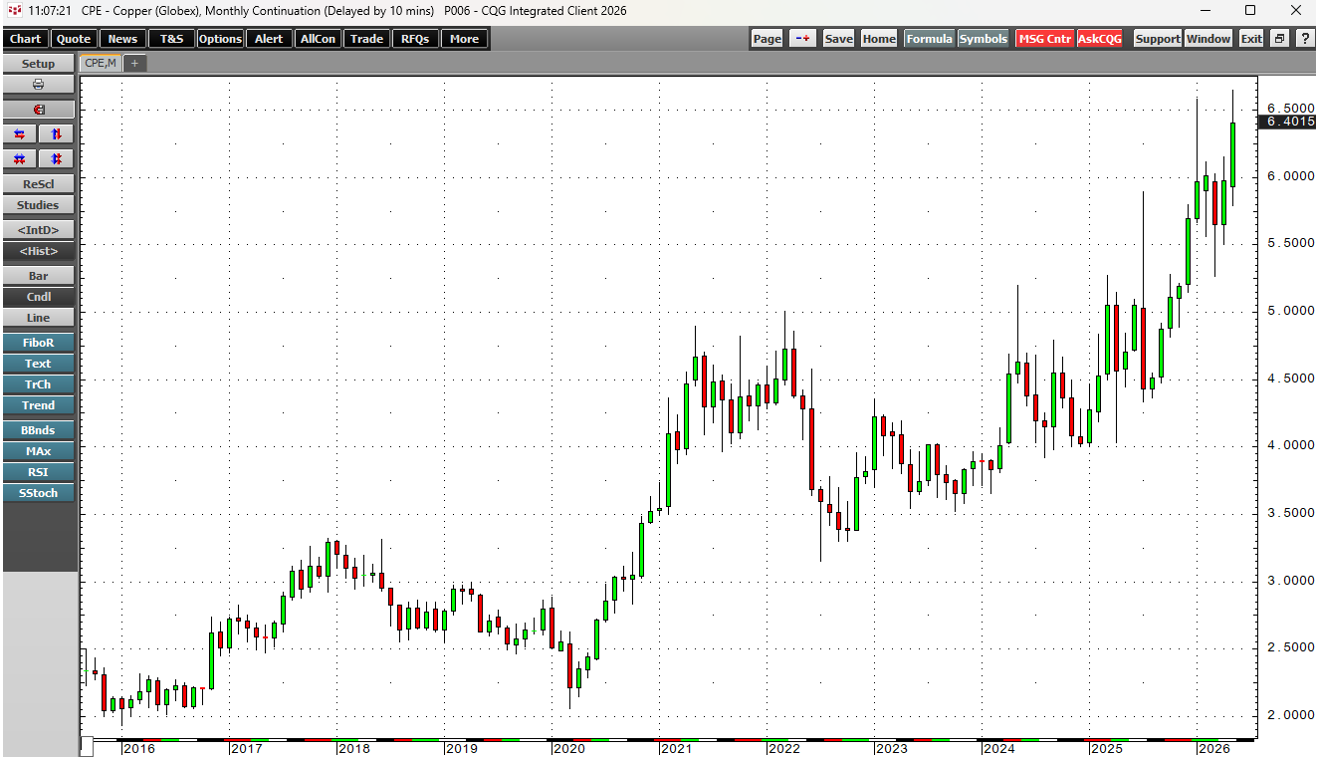
The monthly chart highlights the COMEX copper future's bullish trend, but it also shows that each new high has led to significant percentage corrections.
In May 2021, copper rose above $5 per pound for the first time to $5.01, before correcting 37.1% to a low of $3.15 per pound in July 2022.
In May 2024, copper rose to $5.1985 before correcting 24.6% to a low of $3.9210 per pound in August 2024.
In July 2025, copper rose to $5.8950 before correcting 26.5% to a low of $4.3325 per pound later that month.
The latest correction was at the January 2026 high, when copper rose to $6.5830, then corrected 20% to a low of $5.2680 per pound in March 2026, before the latest rally to another record high in May 2026.
Copper was trading around $6.40 on the continuous futures contract in late May, with the latest high at $6.6450. A 20% correction would take the price to $5.3160 per pound.
Copper is now a trade, not an investment
Copper has nearly reached Goldman Sachs' price target from its 2021 report. The red metal has made higher lows and higher highs for decades, but each new high has led to substantial corrections of over 20%. While AI demand could increase the upside target over the coming years, copper is now priced at a level where the odds of another correction are high.
Copper's daily price action can be volatile.
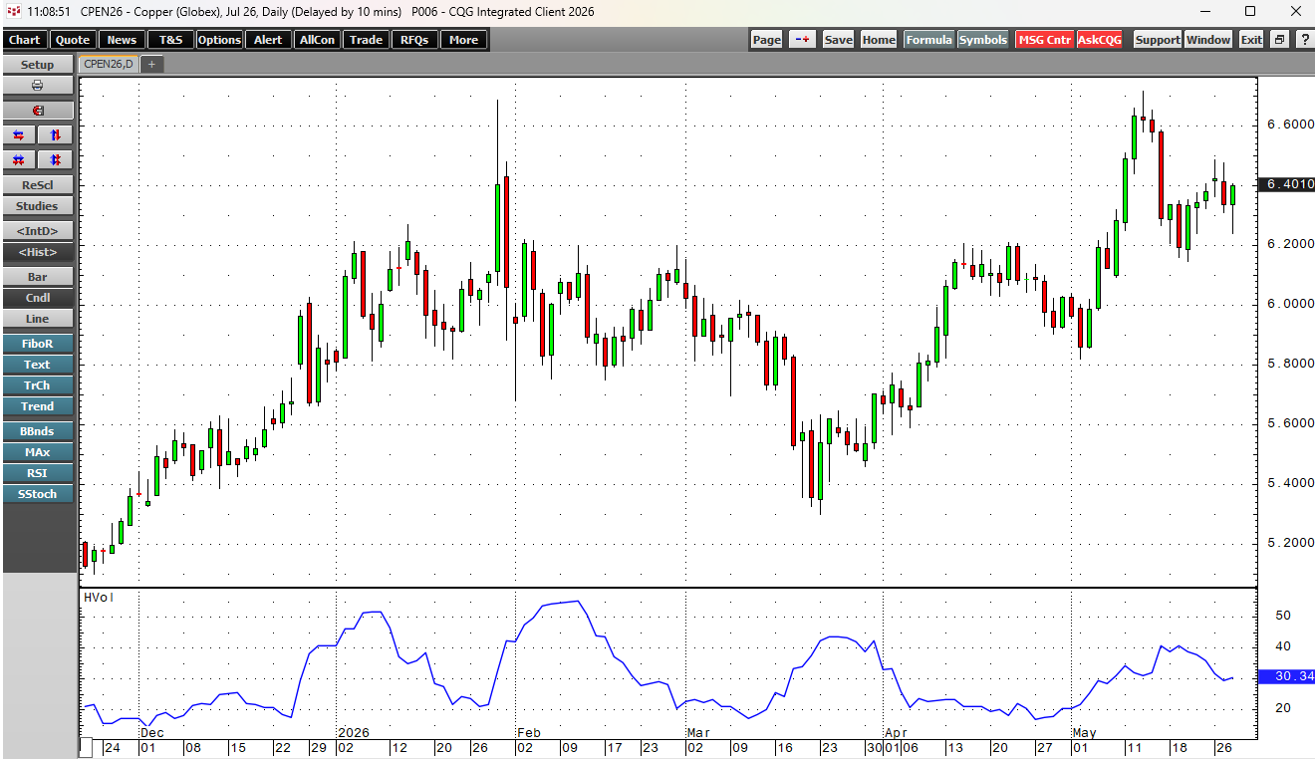
The daily chart shows that daily historical copper volatility has ranged from 14.15% to 55.29% since November 2025.
The long-term bullish trend has made monthly historical volatility lower than the daily price variance measure.
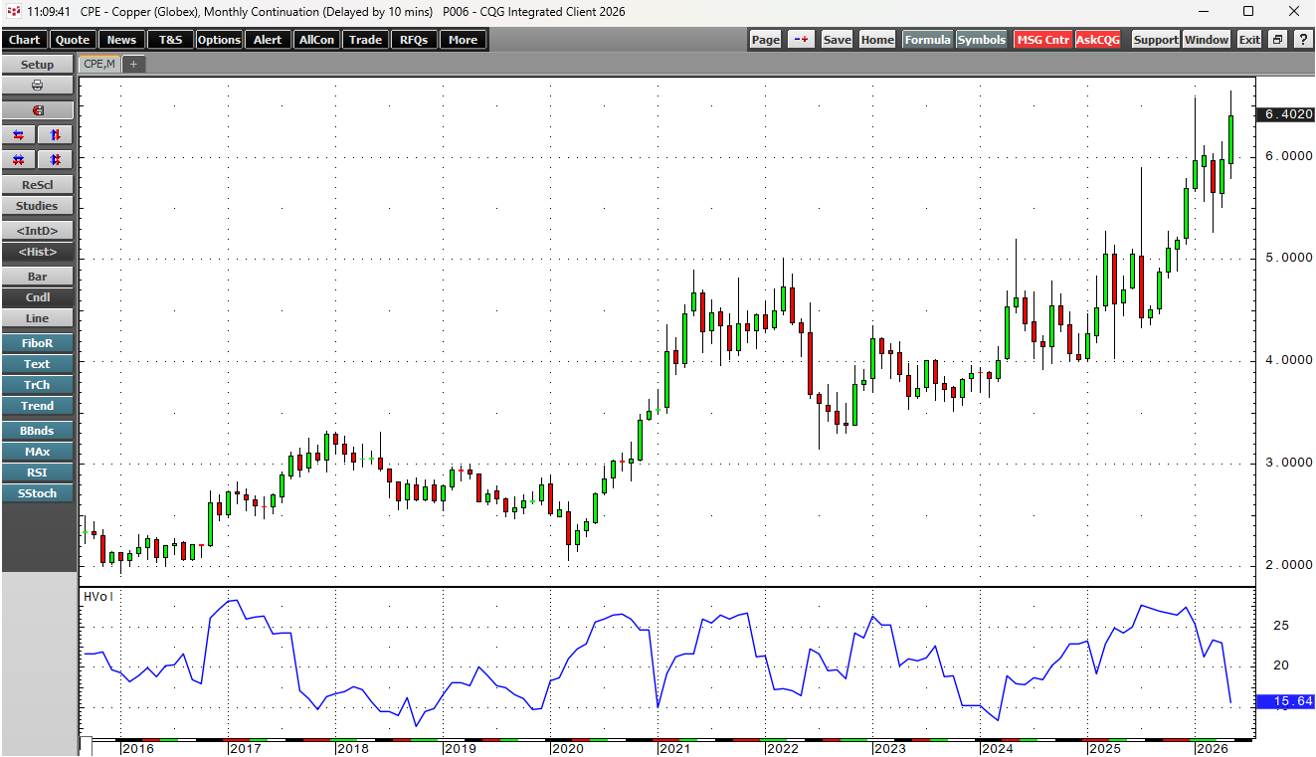
The monthly chart shows that copper futures' monthly historical volatility has ranged from 12.66% to 28.29% since September 2015.
The bottom line is that while copper has reached the bold 2021 price target, the red metal could have further upside as AI demand changes its fundamental equation. Meanwhile, copper's volatile price history shows that new highs have led to over 20% corrections in many cases.
While I have been a copper bull for years, favoring an investment approach, reaching the price target is a significant event that shifts my orientation from long-term investing to medium and short-term trading. Selling rallies and buying on substantial corrections could be optimal for the coming months.