
- The midterm elections will determine the U.S. foreign and domestic policy initiatives
- History favors the opposition party
- Division within the opposition party
- The rising odds of challenges to the ideological status quo
- Stocks, bonds, commodities, and cryptos could see higher volatility over the coming months
Markets reflect the economic and geopolitical landscapes. While ongoing wars in Ukraine and the Middle East have pushed inflationary pressures higher, an upcoming event could ignite even more volatility in markets across all asset classes.
U.S. voters will decide if the administration retains small majorities in the House of Representatives and Senate in early November. The election will determine if current policy initiatives continue or if roadblocks cause gridlock. Moreover, the rise of Democratic Socialists within the opposition party could challenge ideological politics. The bottom line is that uncertainty over the election and its results could ignite volatility in markets over the coming weeks and months.
The midterm elections will determine the U.S. foreign and domestic policy initiatives
The 2024 U.S. election handed President Trump small majorities in Congress and the Senate, paving the way for his agenda initiatives. In November 2026, voters will determine if the legislative majorities remain or shift to Democrats, which are opposed to most, if not all, of the current administration's policies.
As the election approaches, expect markets to become volatile as uncertainty will likely impact sentiment. Markets embrace stability and tend to reject uncertainty.
History favors the opposition party
Historical trends favor Democrats taking majorities in Congress and the Senate from Republicans. Polls show that voters are increasingly unhappy with issues surrounding affordability and the Middle East conflict. The rise of AI is also causing concerns, as younger Americans worry that technological advances will reduce employment opportunities over the coming years.
While middle-of-the-road Democrats have fared well during midterm elections when Republicans held the White House, one issue could derail the historical trend as a bifurcation within the Democrats' party has developed.
Division within the opposition party
Primary challenges to middle-of-the-road and even some progressive Democrats by the DSA, Democratic Socialists of America, have unseated a growing number of incumbents in favor of DSA-supported candidates. While progressive Democrats have fared well over the past years, the DSA has taken the progressive initiatives to another level.
The bottom line is that the bifurcation within the opposition party could cause voters to return or even increase the Republican majorities. However, if the DSA is successful, it could usher in a massive change in U.S. government.
The rising odds of challenges to the ideological status quo and other factors that could create volatility
Socialism is on the ballot in many states in November 2026 by virtue of the DSA candidate's policy positions that include changes in taxation, regulations, structure of the judiciary, and even in the U.S. bicameral legislature. The U.S. republic has embraced a capitalist ideology, but the DSA proposes a shift from free markets and individually owned property to government control of the means of production, increased central planning, and government oversight to manage the production and distribution of goods and essential services.
Many younger Americans have embraced the DSA policies due to affordability issues and fears about AI reducing the job market, along with other issues. Several charismatic DSA politicians have captured the support of a growing number of disillusioned Americans over the past years.
Meanwhile, there are other issues facing the U.S. as voters go to the polls. The escalating war in the Middle East, stubborn inflationary pressures, and political division have increased. Immigration policy remains a significant issue for voters. Elections have consequences, and the 2026 midterms could change the current administration's policy initiatives and could even set the stage for a dramatic change in U.S. political ideology for the coming years.
Stocks, bonds, commodities, and cryptos could see higher volatility over the coming months
Markets reflect the political and economic landscapes. The uncertainty of the outcome of the 2026 midterm elections is likely to lift volatility in markets across all asset classes.
The S&P 500 is the most diversified U.S. stock market index. SPY is the ETF that tracks the S&P 500.
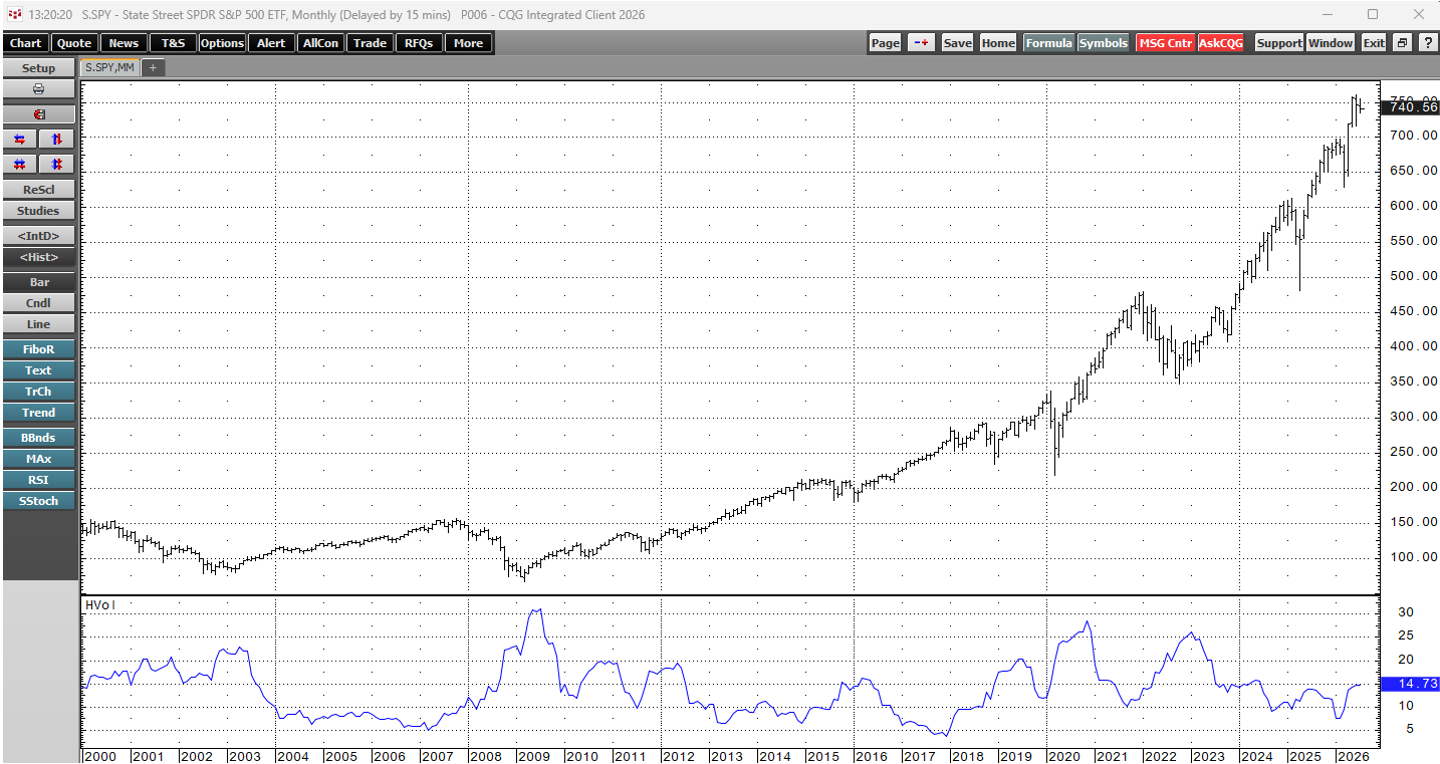
The monthly chart dating back to 2000 shows that the current historical volatility of SPY is 14.73% with a range of 3.66% to 31.20%.
The U.S. 30-Year Treasury bond futures are the benchmark for long-term U.S. interest rates and impact mortgages and long-term financing costs. When it comes to commodities, interest rates impact financing commodity production and the cost of carrying inventories.
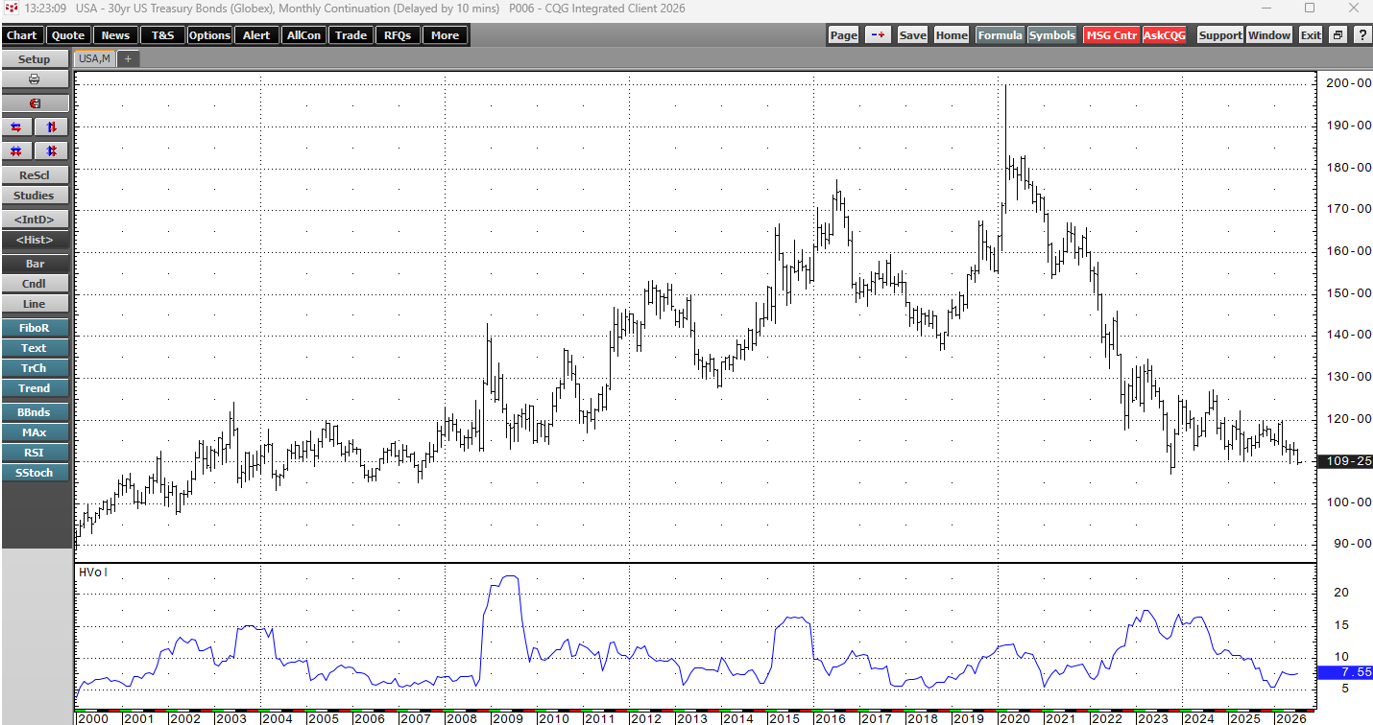
The 26-year chart shows that historical volatility of the U.S. 30-year Treasury bond futures stands at 7.55% with a range of 3.77% to 22.96%.
The U.S. dollar is the world's reserve currency.
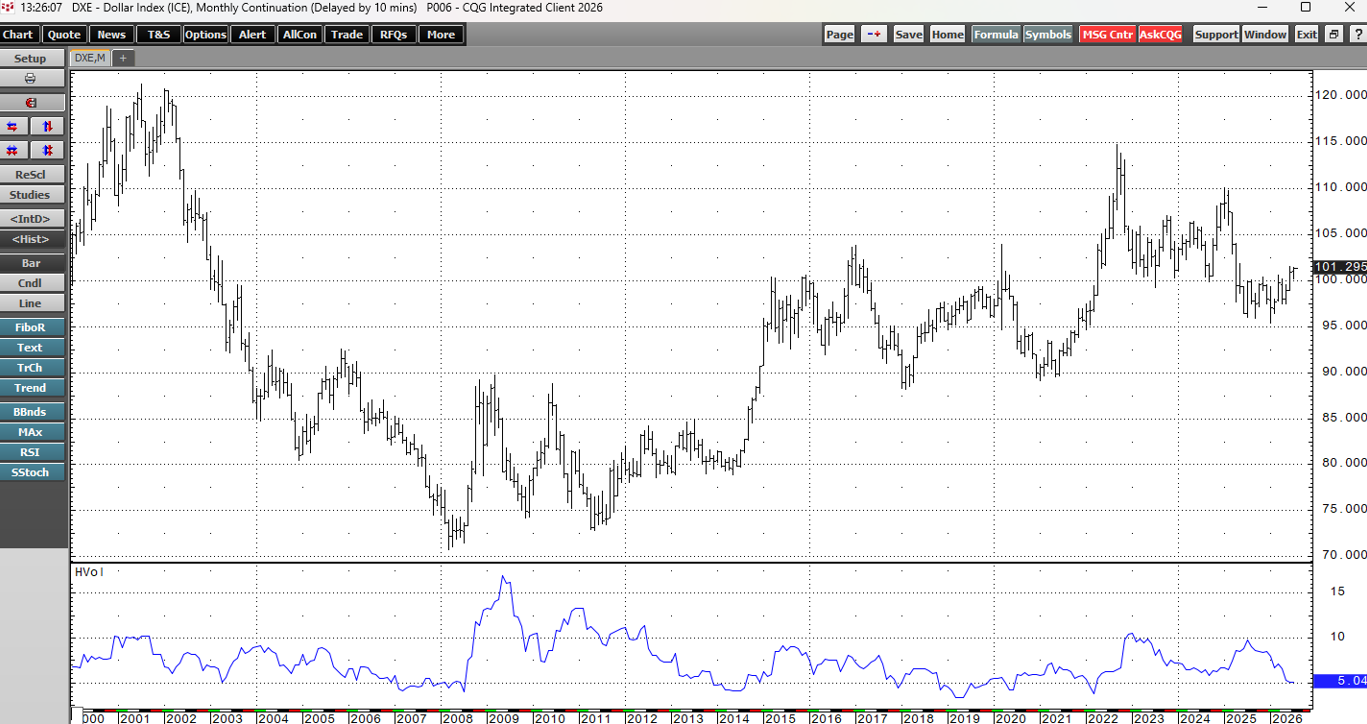
The chart shows the historical volatility of the U.S. dollar index that measures the U.S. currency against other world reserve currencies. The index's historical volatility stands at 5.04% with a range of 3.34% to 16.96% this century.
The stock, bond, and currency markets impact the path of least resistance of commodity, cryptocurrency, and markets across all asset classes. Economics and politics are critical sentiment factors for these markets. The uncertainty of the upcoming U.S. midterm elections and outcome could increase, perhaps dramatically increase, volatility in these markets from the current levels.
Therefore, investors and traders should prepare for what could be an extremely wild ride and risk-off conditions over the coming months. Fall has historically been a volatile period in markets, and the upcoming season in 2026 has all the ingredients to continue that trend.