
- U.S. natural gas futures prices are below $3 for nearby delivery
- Peak-season U.S. prices are near $4 per MMBtu
- Inventories are stable. European prices remain elevated
- The hostilities in the Middle East could increase the demand for U.S. LNG
- Levels to watch as the 2026/2027 withdrawal season approaches
Natural gas is a seasonal commodity with peak demand in winter when temperatures drop and heating demand rises. Last winter, nearby NYMEX natural gas futures rose to $7.827 per MMBtu in January before dropping to $2.483 per MMBtu in April, at the start of the 2026 injection season when U.S. natural gas inventories build.
The U.S. natural gas futures market on the CME's NYMEX division began trading in 1990 when natural gas flows were limited to the North American pipeline network. Over the past years, technological advances in processing gas into liquid form, or LNG, have increased the market for U.S. natural gas as it now travels by ocean vessel to regions where prices are far higher.
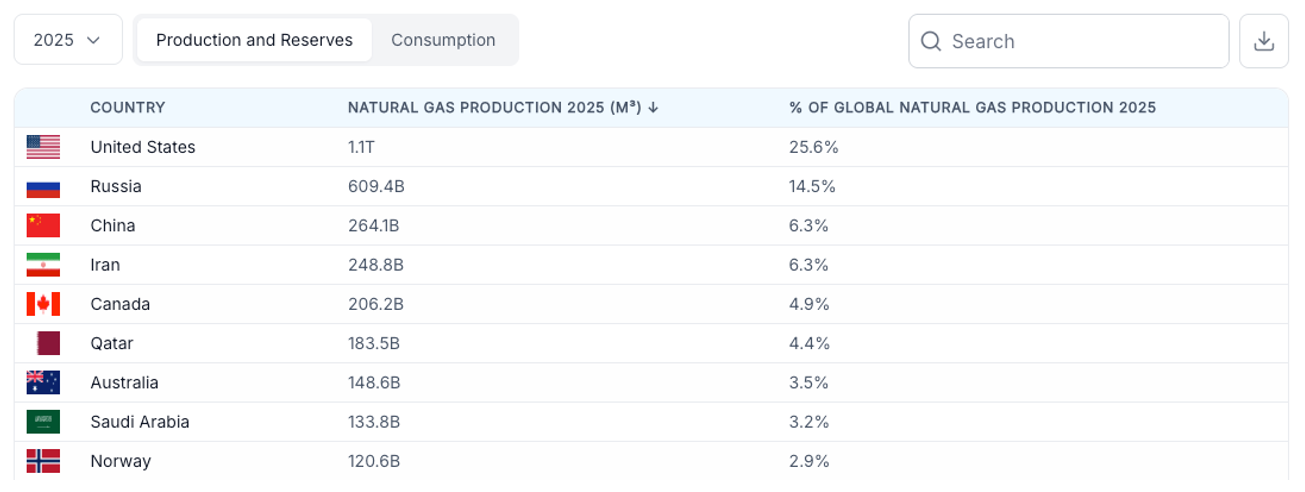
Source: worldpopulationreview.com
The chart shows that the United States is the leading natural gas producer, by far, with Russia second. Iran, Qatar, and Saudi Arabia together produce enough natural gas to make the three Middle East producers third behind Russia, with more than twice China's production.
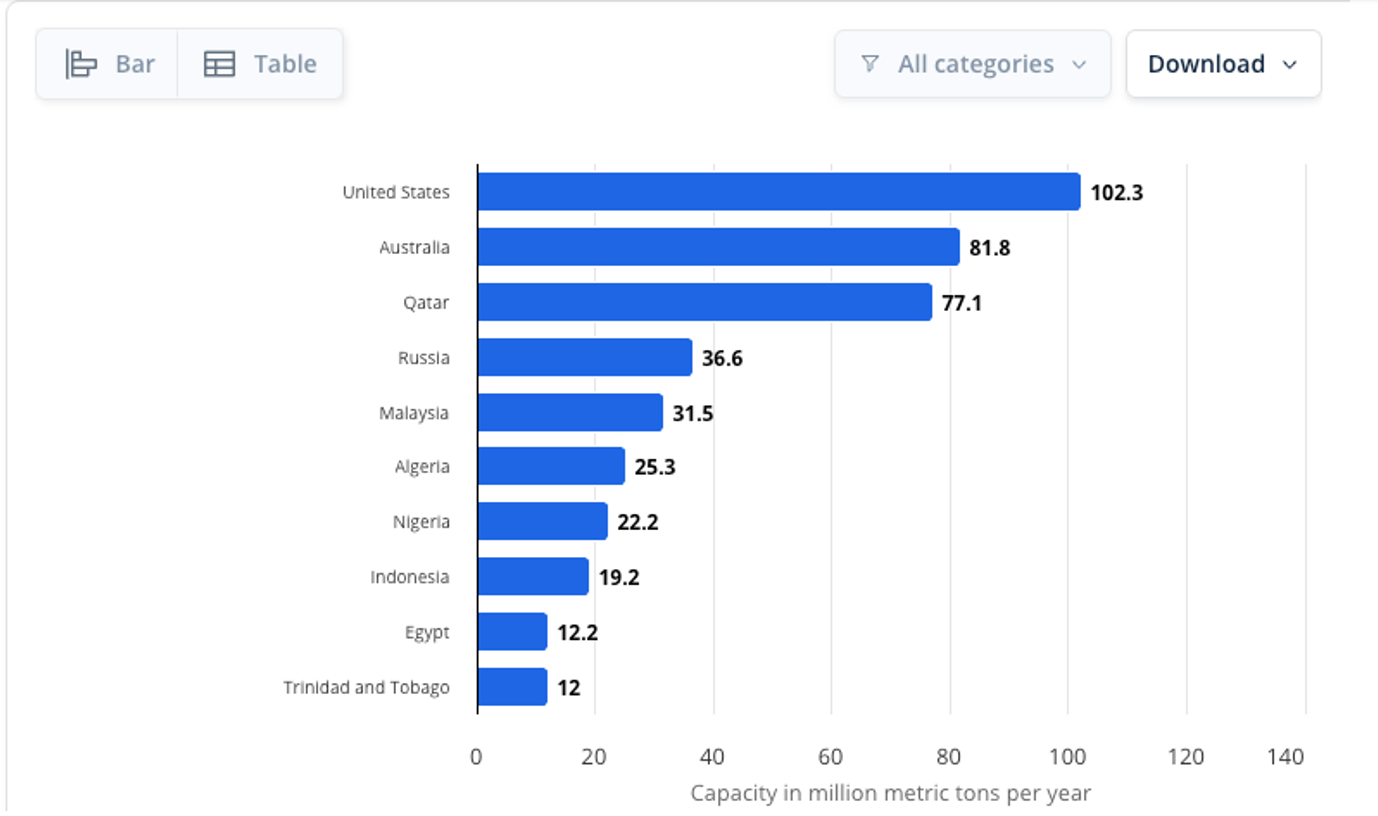
Source: Statista
The chart shows that while the U.S. leads the world in LNG export capacity, Qatar and Russia together have slightly more export capacity than the U.S.
Markets reflect the economic and geopolitical landscape. War, sanctions, tariffs, and other factors could become a very bullish cocktail for LNG and natural gas prices over the coming months as the 2026/2027 peak demand season in the Northern Hemisphere approaches.
U.S. natural gas futures prices are below $3 for nearby delivery
NYMEX natural gas futures for October 2026 delivery reached a low of $2.668 per MMBtu on August 7, where it found a bottom.
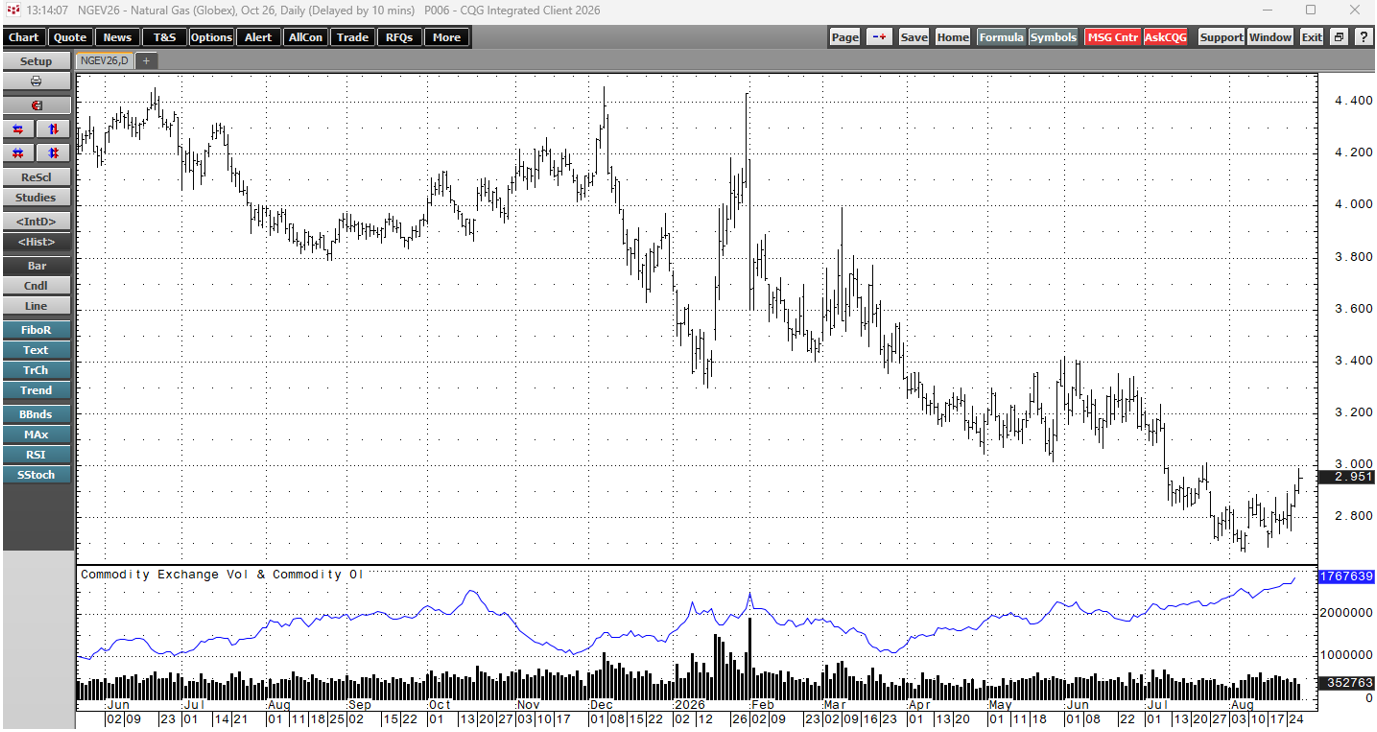
The daily chart shows the price has made higher lows and higher highs throughout August, reaching its latest high of $2.99 per MMBtu on August 27. Open interest has been rising with the price and stands at over 1.767 million contracts, the highest level in 2026 and in history.
Peak season U.S. prices are near $4 per MMBtu
As the peak heating season approaches, the U.S. NYMEX natural gas futures curve highlights the seasonally higher prices during winter.
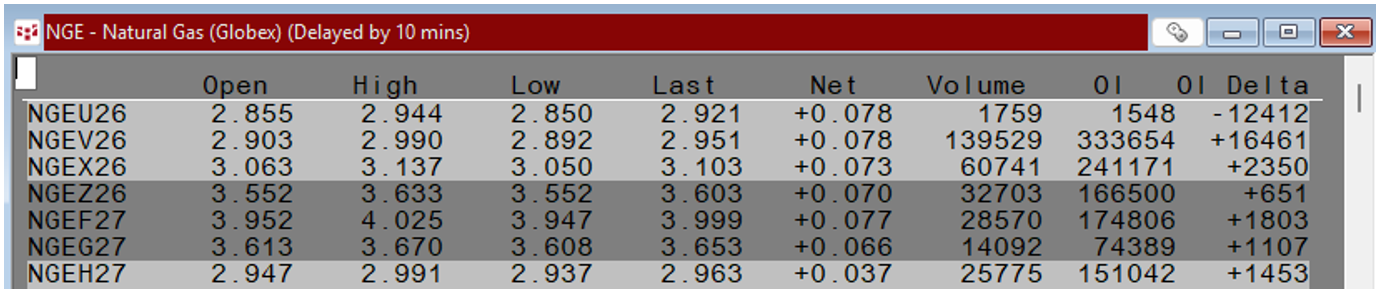
The chart shows that while natural gas prices for November 2026 delivery are just over $3, prices for December are above $3.65 and for January 2027 are closing in on $4 per MMBtu.
The price drops back below $3 for March 2027, as the shoulder season brings little heating and cooling demand.
Inventories are stable. European prices remain elevated
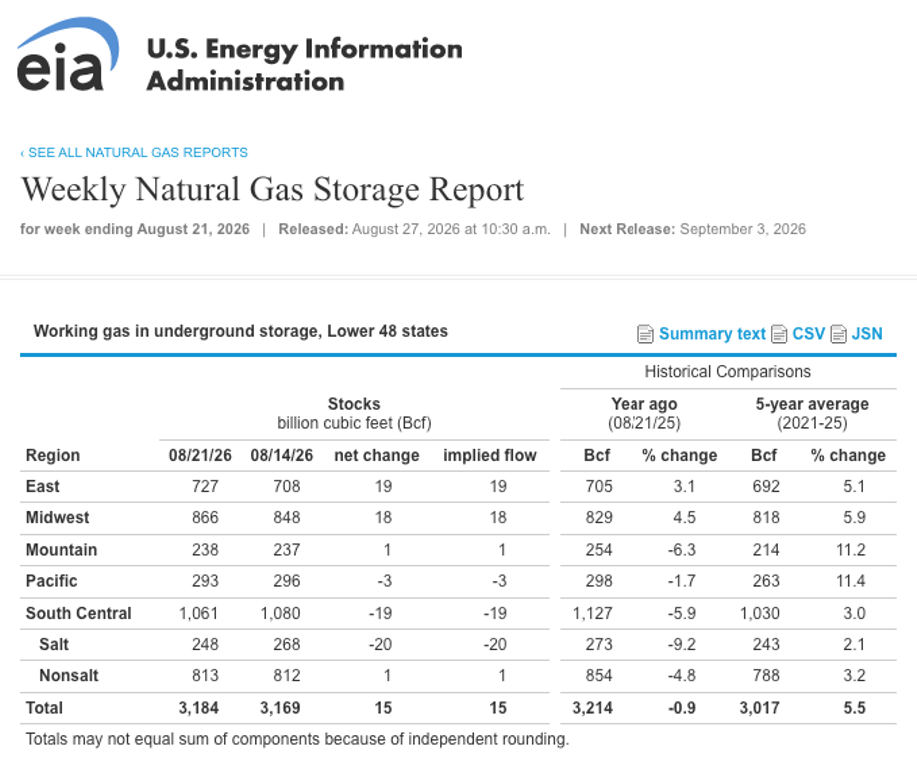
The EIA reported the latest U.S. natural gas inventory data on August 27.
Source: EIA
At 3.184 trillion cubic feet, U.S. inventories were 0.9% lower than at the same time in 2025, but remain 5.5% higher than the five-year average for the end of August. While the inventory data suggests plenty of natural gas is available for the upcoming U.S. peak heating season, the same may not be true in Europe.
An August 26, article in Euro News stated that “The Netherlands will miss its winter gas-storage target, leaving it insufficiently prepared for an exceptionally hard winter without additional measures, according to Dutch state-owned gas infrastructure company Gasunie.”
The latest August 27 Dutch natural gas futures price for nearby delivery was 68.76 euros compared to a high of 35.40 euros in August 2025. Meanwhile, U.K. natural gas prices were 169.38 GBP on August 27, much higher than the August 2025 high of 87.07 GBP.
U.S. natural gas prices at $2.92 on August 27, 2026, were 7.2% lower than the August 2025 high of $3.148; Dutch and U.K. prices were near double the price in August 2025.
The hostilities in the Middle East and the war in Ukraine could increase the demand for U.S. LNG
LNG has changed the fundamental dynamics for U.S. natural gas. As the world's leading producer and exporter, the United States can ship natural gas in liquid form to countries worldwide where prices are far higher.
Dutch and U.K. prices are elevated because of sanctions on Russia, which formerly supplied Western Europe through pipelines, and because of the hostilities in the Middle East that have curtailed LNG shipments from Qatar. Western Europe will likely turn to the United States over the coming weeks and months to bolster supplies as winter approaches, supporting U.S. domestic prices if U.S. inventories begin to drop to levels well below last year and the five-year average. Sanctions on Russia and logistical challenges around the Strait of Hormuz and Bab al-Mandab Strait could continue to limit traditional European natural gas channels.
Levels to watch as the 2026/2027 withdrawal season approaches
The long-term monthly chart shows support and resistance levels that favor the upside over the coming weeks and months. The U.S. withdrawal season typically begins in November, and prices tend to move higher during winter.
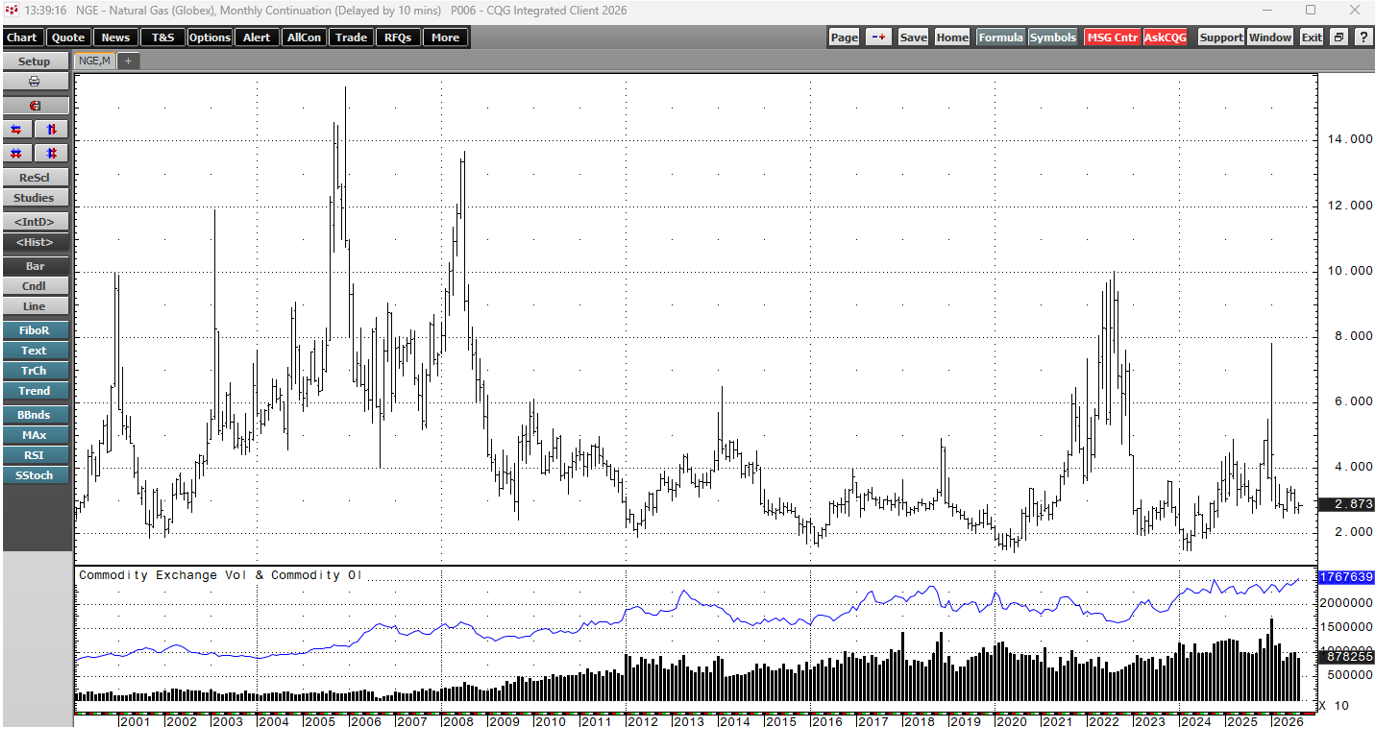
The first thing to notice about the monthly chart is that open interest, the total number of open long and short positions in the NYMEX U.S. natural gas futures market, is at an all-time high. Technical support on the continuous futures contract is at the April 2026 low of $2.483 per MMBtu, with technical resistance at the June 2026 high of $3.441 per MMBtu. However, the January 2026 high of $7.827 per MMBtu could be a target for the energy commodity futures, as demand from Europe is likely to soar over the coming months. With January NYMEX futures below $4 per MMBtu in late August 2026, the odds favor the upside, with the potential to rise nearly $4 above the current price if U.S. natural gas prices return to the 2026 high for January 2027 delivery.
The current risk-reward profile of the U.S. natural gas futures market suggests that this is the perfect time to put the energy commodity on your trading radar.