
- Historical crude oil volatility remains elevated
- Bullish and bearish factors could create massive price swings
- Oil products- Seasonality in gasoline, high distillate prices
- A wide gap between WTI and Brent prices
- Levels to watch in NYMEX WTI crude oil futures
Ongoing conflicts in Ukraine and the Middle East have created significant volatility in oil and oil product prices. Russia is a leading crude oil producer. Sanctions on Moscow and Ukrainian attacks on Russian oil and gas infrastructure have caused supply concerns. The conflict between Iran and the United States has only increased crude oil and oil product volatility. The U.S. insists that Iran reopen the Strait of Hormuz and abandon its nuclear ambitions. Iran has attacked countries in the Middle East hosting U.S. military assets. Many of those attacks have been on oil infrastructure, refining, pipelines, and shipping. More recently, Houthis in Yemen have attacked Saudi Arabian oil infrastructure, refining, and pipelines, only increasing supply fears.
Crude oil and oil product volatility has risen to the highest level in years, and the wide price swings are likely to continue through the end of 2026 and into 2027.
Historical crude oil volatility remains elevated
In 2022, the year Russia invaded Ukraine, sending crude oil to the second-highest price in history, nearby NYMEX crude oil futures traded in a $60.42 range from low to high. The range was $31.39 in 2023, $22.40 in 2024, and $25.79 in 2025. In 2026, as the war in Ukraine continued and the conflict between the U.S. and Iran broke out and spread to attacks on neighboring countries, the range rose to $63.72 per barrel as of the end of September. Crude oil has traded in its widest range since 2020 and 2008. In 2020, the global pandemic sent short-term crude oil prices below zero for the first time, and in 2008, wild market volatility caused by the global financial crisis sent oil prices to a record high before they fell by over $100 per barrel.
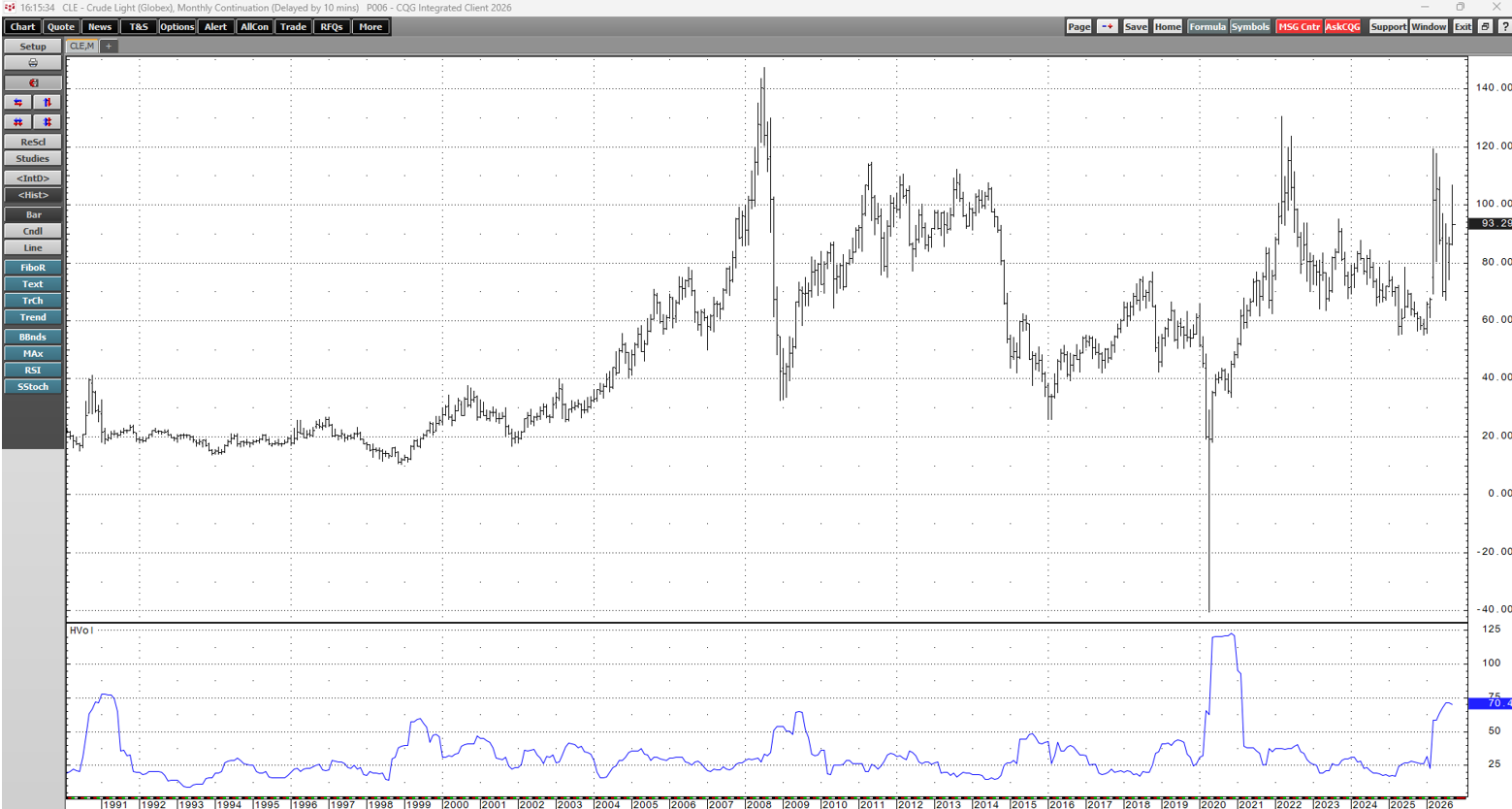
The chart shows that monthly historical volatility in NYMEX WTI crude oil futures at 70.4% is the highest since 2020, when crude oil plunged to a record low of -$40.32 per barrel because there was nowhere to store the energy commodity during the pandemic and historical volatility spiked to over 122%. The record 2008 high only sent historical volatility to 65.04% in 2009 as the price plunged by over $100 per barrel. Crude oil volatility was higher in 1991 at over 78% on another Middle East event, Iraq's invasion of Kuwait. At over 70% in 2026, crude oil's historical volatility remains elevated.
Bullish and bearish factors could create massive price swings
NYMEX crude oil futures face bullish and bearish factors in October 2026, which should keep volatility at the highest level in years.
The bullish factors include:
- The war in Ukraine is approaching its fifth year. Sanctions on Russia, Ukrainian drone attacks on Russian petroleum infrastructure, and sanctions on Russian oil have pushed prices higher.
- The conflict between the U.S. and Iran threatens continued attacks on oil infrastructure and shipping throughout the Middle East. Closures of the Strait of Hormuz, separating the Persian Gulf from the Gulf of Oman, and the Bab al-Mandeb Strait in the Red Sea create a logistical nightmare for transporting petroleum, oil products, and other commodities from producers to worldwide consumers.
- Inflation, a legacy of the 2020 global pandemic, remains stubbornly high, increasing production costs and traditional energy prices. Higher energy prices increase inflation and vice versa, in a chicken-and-egg financial paradox.
- AI data centers with rising energy requirements only increase the demand for crude oil, which remains the energy commodity powering the world.
- A growing population, now over eight billion, means more people each year need more energy.
- A shift in U.S. energy policy after the midterm elections to address climate change with green energy alternatives could reduce U.S. production, exacerbating global supply concerns.
- The trend in crude oil prices since the 2020 historical low has been volatile and higher.
The bearish factors include:
- The U.S. has become energy independent, producing more oil daily than Saudi Arabia and Russia. The U.S. will likely become a net exporter of crude oil and oil products if the administration's energy policies remain in place.
- An end to the war in Ukraine and the Middle East conflict that removes sanctions and logistical issues could cause oil prices to plunge.
- On May 1, 2026, the UAE resigned from OPEC, diminishing the international oil cartel's pricing power.
- The U.S. agreement with Venezuela, with the world's leading reserves, covers the country's 65 billion barrels.
- All past explosive rallies in crude oil have been followed by implosive periods.
The bottom line is that the NYMEX crude oil futures market faces significant bullish and bearish factors pulling prices in opposite directions, favoring continued high volatility over the coming months and into 2027.
Oil products - Seasonality in gasoline, high distillate prices
Gasoline is a seasonal oil product that tends to rally during spring and summer when drivers put more miles on their cars. Gasoline prices tend to decline during fall and winter as weather conditions impede driving and gasoline consumption.
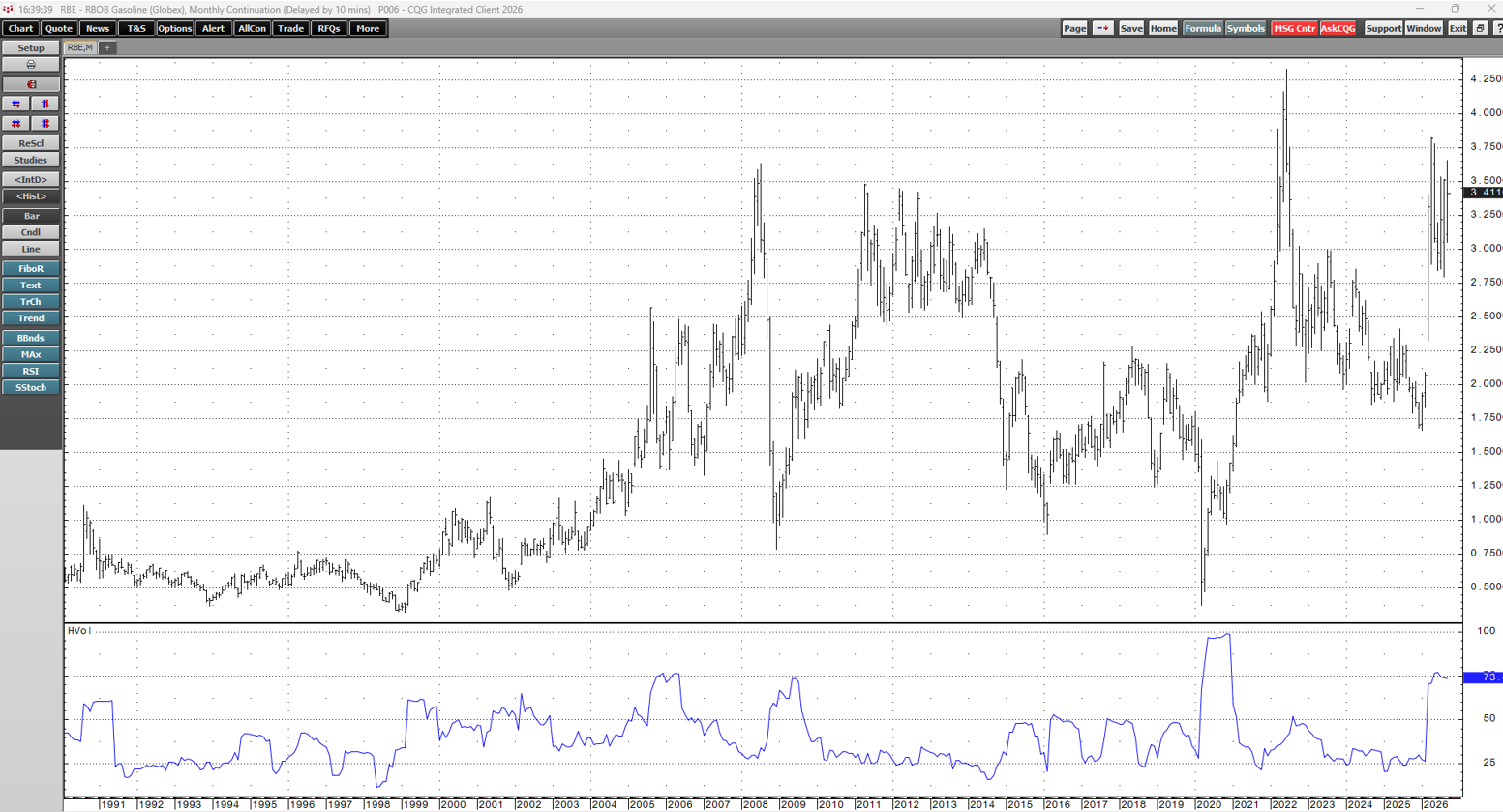
Nearby NYMEX gasoline prices in late September above $3.40 per gallon are $1.35 per gallon higher than the September 2025 high. Gasoline monthly historical volatility is elevated at over 73%.
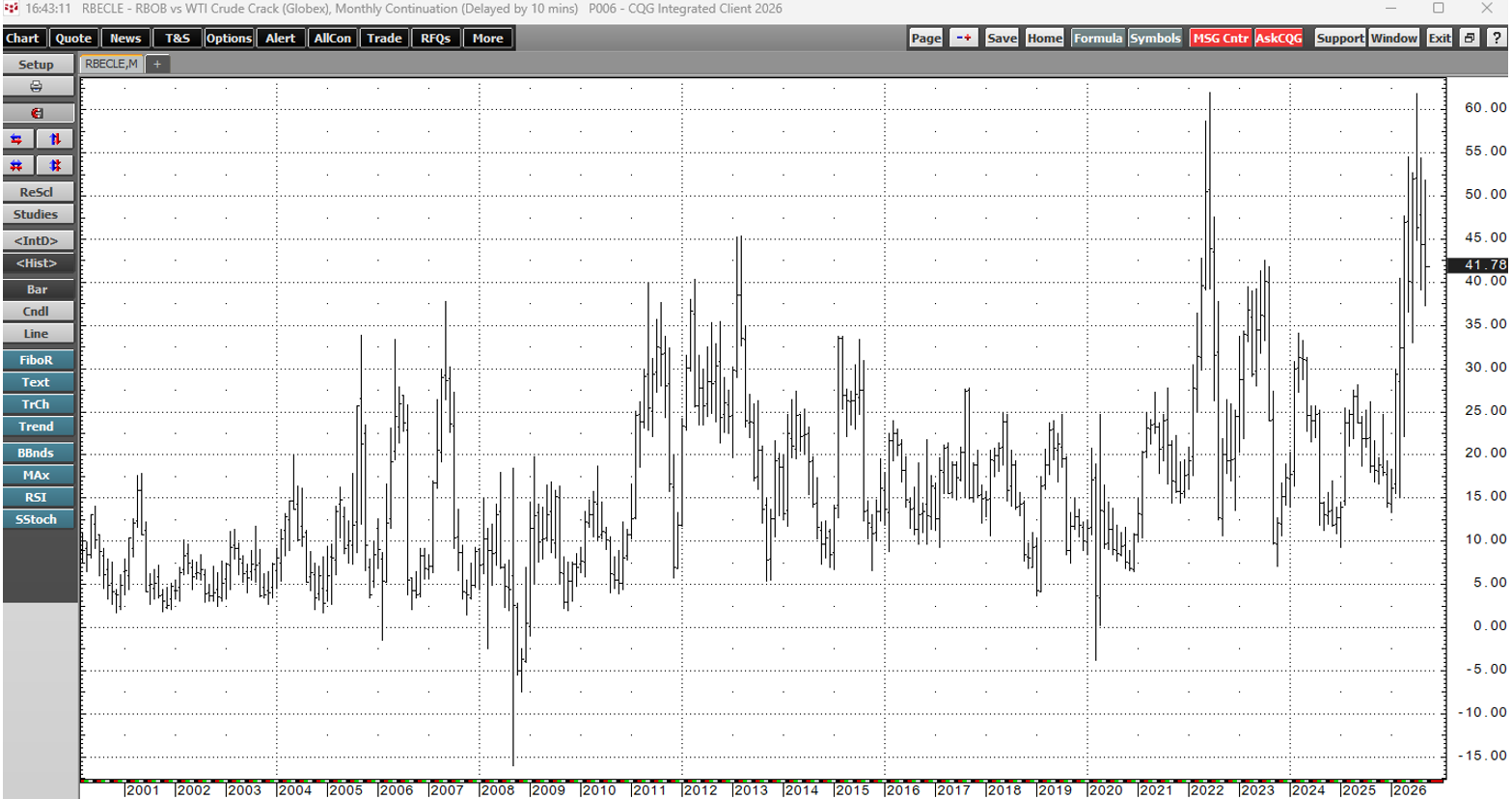
Gasoline crack spreads at over $41 per barrel are $20 higher than the September 2025 high.
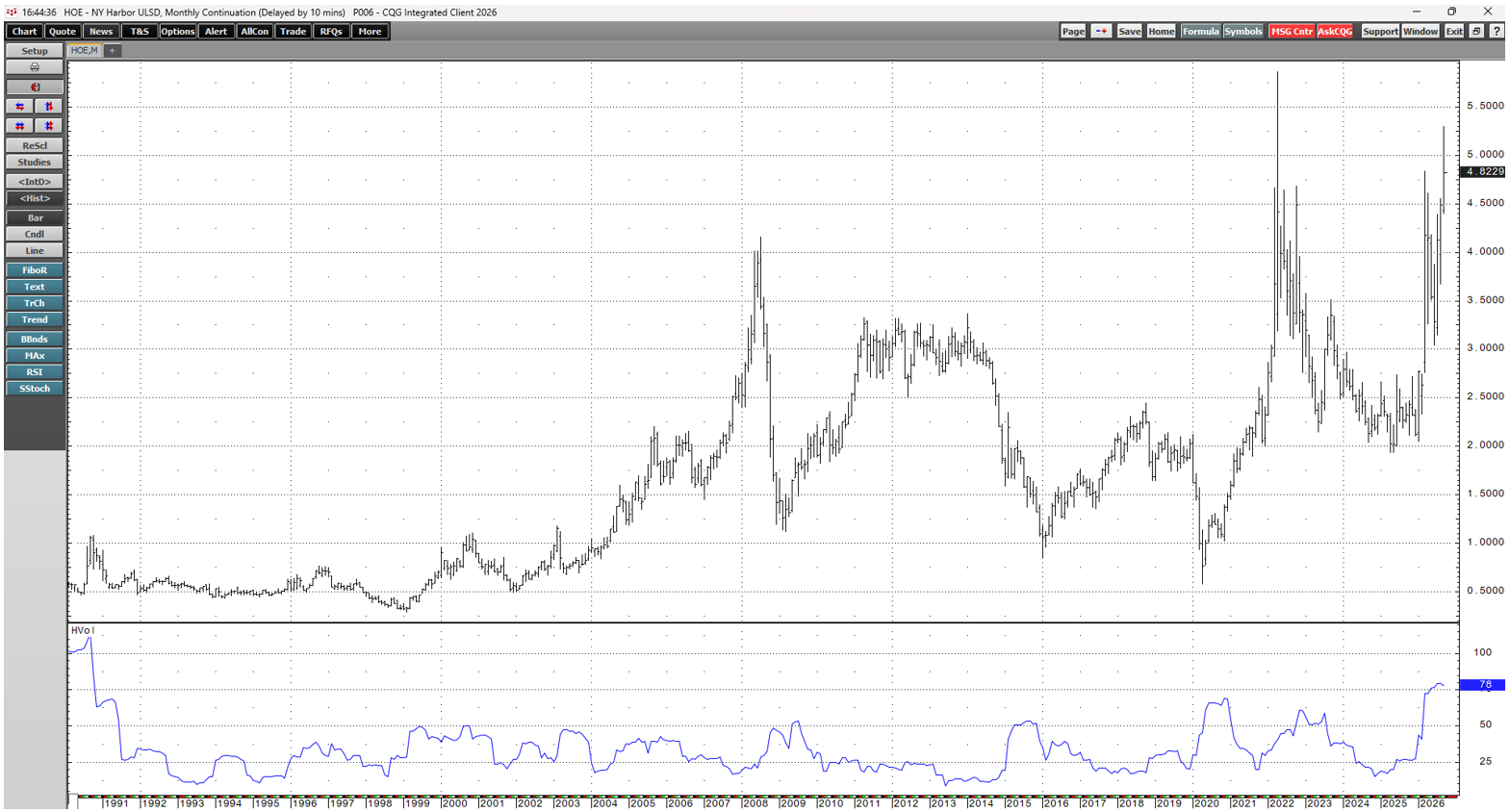
Nearby NYMEX heating oil futures prices in late September above $4.78 per gallon are more than $2.30 per gallon higher than the September 2025 high. Heating oil, a proxy for medium distillates including diesel and jet fuels, has monthly historical volatility over 78%, the highest level since 1991.
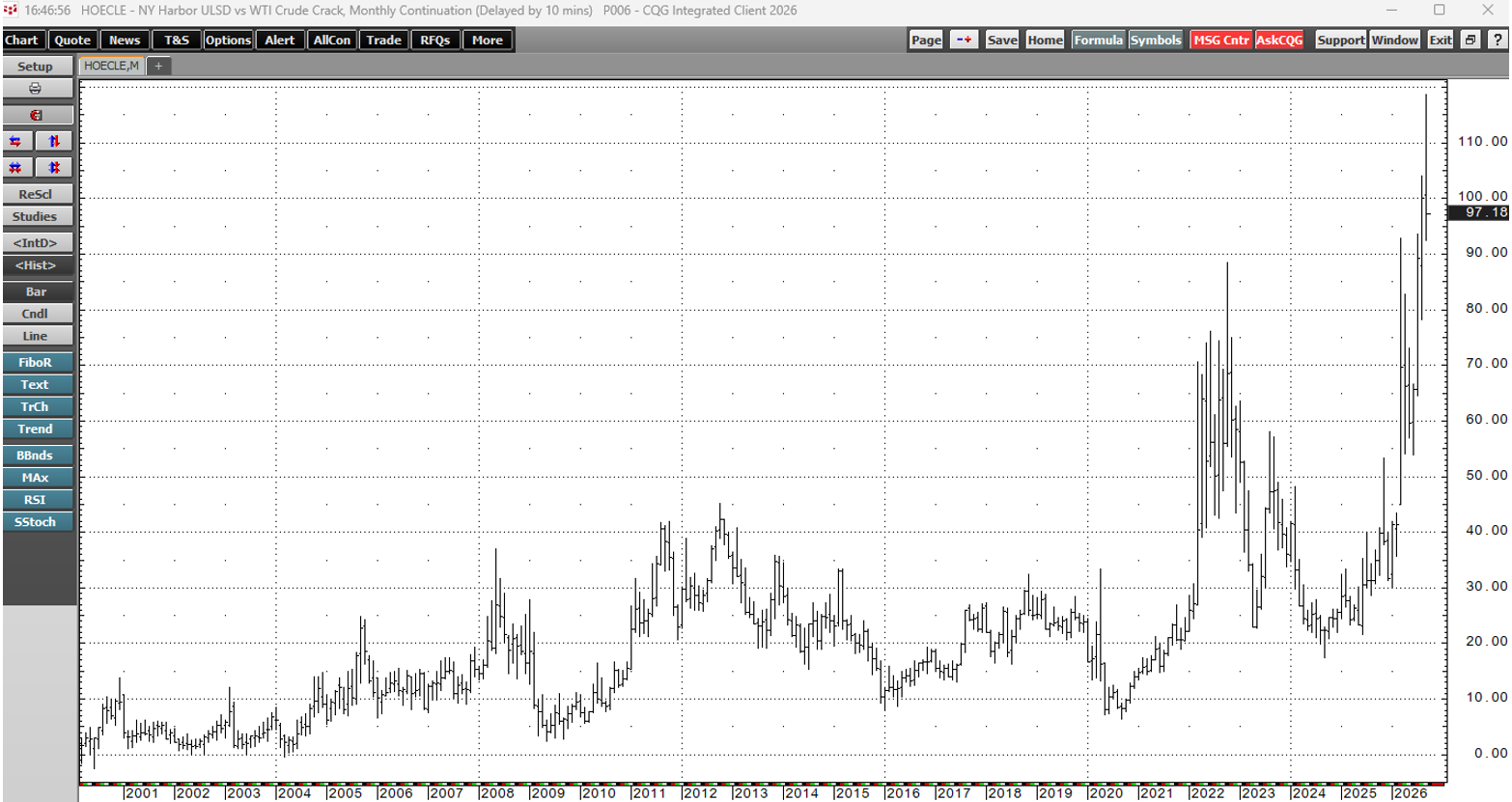
Heating oil crack spreads above $97 per barrel are at the highest level in history, after rising to a record high of $118.62 per barrel in September 2026.
Gasoline is a seasonal fuel, but supply concerns are keeping the price elevated in late September 2026. Heating oil futures, a proxy for distillates, is a year-round fuel, and its price remains extremely high, with the refining spread at a record high. Brent's strength stems from issues facing Russian and Middle Eastern supplies and refining.
A wide gap between WTI and Brent prices
NYMEX West Texas Intermediate crude oil and Brent North Sea crude oil on the Intercontinental Exchange are the petroleum pricing benchmarks. Other grades trade at a premium or discount to the WTI and Brent benchmarks.
WTI is crude oil produced in North America, and reflects around one-third of worldwide supplies. Brent, which reflects two-thirds of world supplies, is the benchmark for European, Russian, African, and Middle Eastern crude oil. Both Brent and WTI are light, sweet crude oil, meaning they have low sulfur content. WTI has slightly less sulfur, making it ideal for processing into gasoline. Brent's slightly higher sulfur content makes it more suitable for refining into distillates.
Brent's premium to WTI reflects the supply concerns caused by geopolitical turmoil in Eastern Europe and the Middle East.
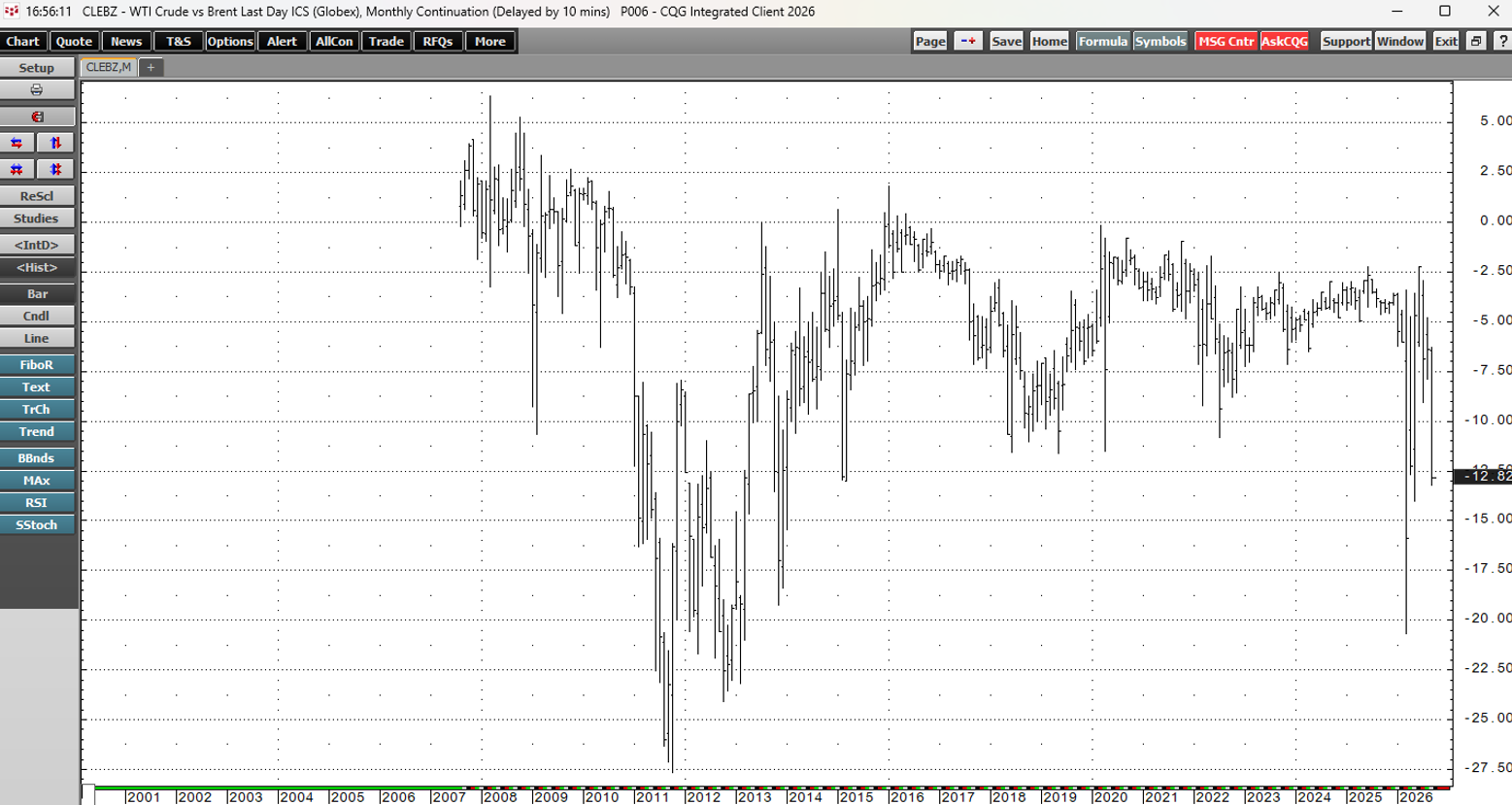
The chart shows that aside from spikes higher or lower, Brent's median premium over WTI for the past two decades has been around $4 per barrel. The $12.82 premium for Brent over WTI in late September reflects the supply concerns for Brent petroleum, leading to strength in distillate and distillate refining spreads.
Levels to watch in NYMEX WTI crude oil futures
The monthly chart of NYMEX crude oil highlights the $63.72 per barrel 2026 trading range.
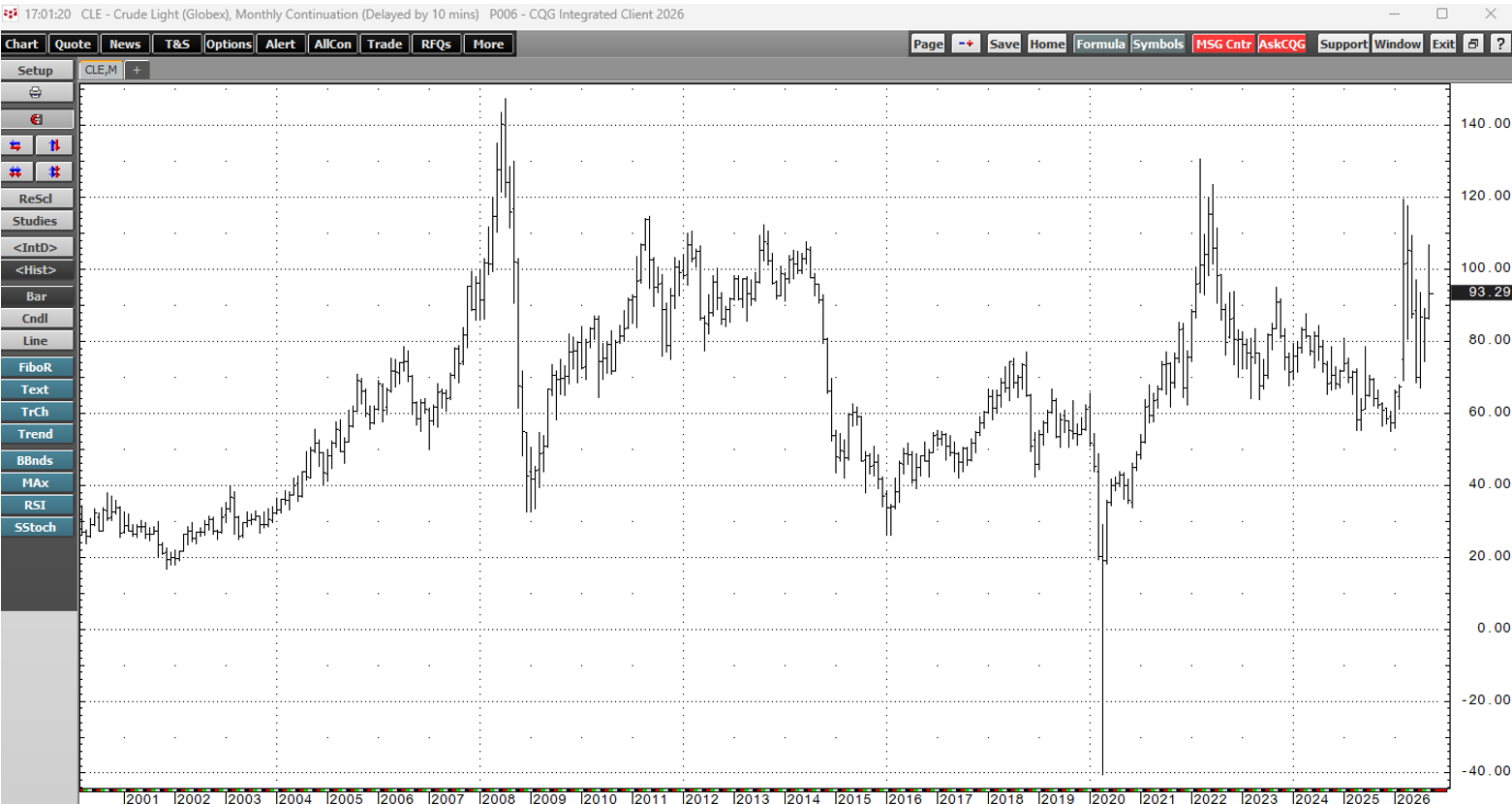
At $93.29 on September 28, it is slightly above the midpoint of the 2026 trading range at $87.62 per barrel. Technical resistance is at the September 2026 high of $106.75 and the March 2026 high of $119.48 per barrel. Technical support is at the July 2026 low of $67.04 and the December 2025 low of $54.98 per barrel.
Expect continued volatility in crude oil over the coming months. The energy commodity is likely to trade with the geopolitical news cycle, but the U.S. midterm elections that could influence U.S. energy policy are another factor that could affect prices. Volatility is a nightmare for passive investors, but creates a paradise of opportunities for disciplined trend-following traders who can react quickly to changing market dynamics. Moreover, crude oil's price path is likely to continue to drive markets across all asset classes, as it is a crucial factor in the cost of goods sold for most goods and services.